
When Oil Stops Flowing: Is 2026 the New 1973?
The US-Iran war has produced what analysts are calling the most significant oil supply disruption ever recorded.

Approximately 20% of global crude supply has been halted as tanker traffic through the Strait of Hormuz grinds to a near-standstill. Crude oil is above $100 a barrel. The IEA is considering its largest-ever strategic reserve release of 300 to 400 million barrels. And countries that did not build supply buffers are already rationing fuel.
This is not just a geopolitical event. It is an economic stress test, one that is separating countries that built energy resilience from those that did not, and one that may permanently accelerate the one structural shift that oil-dependent economies have been deferring for years: the move to electric vehicles.
The Strait of Hormuz: The World’s Most Dangerous Chokepoint
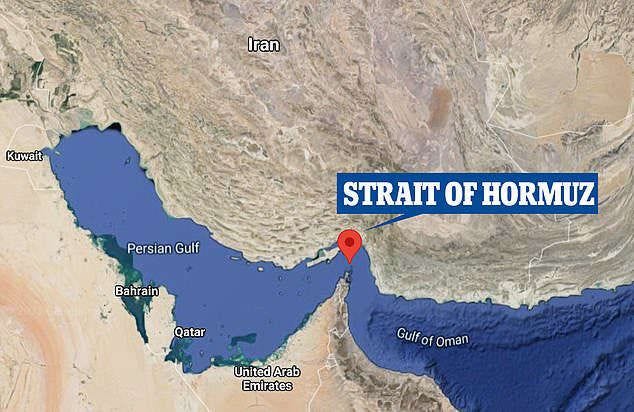
The Strait of Hormuz is a narrow waterway between Iran and Oman, roughly 33 kilometres wide at its narrowest point. Through it flows nearly 20% of the world’s oil and a significant share of global LNG. Saudi Arabia, the UAE, Kuwait, Iraq, and Qatar all depend on it as their primary export corridor.
Since the US-Iran conflict escalated, tanker movements have been near-totally disrupted. Unlike the 1973 Arab oil embargo, which was a deliberate supply restriction affecting primarily the West, the 2026 Hormuz closure simultaneously disrupts transit and directly threatens Gulf production infrastructure. Attacks on Saudi, Qatari, and UAE facilities have compounded the shock in a way the 1970s crises did not.
The result: a supply disruption that, in scale and speed, has no modern precedent.
Lessons from 1973 (That Most Countries Did Not Learn)
This is not the first time the world has been here. In 1973, the Arab oil embargo followed the Yom Kippur War. In 1979, the Iranian Revolution produced a second shock. Both events sent crude prices spiralling, triggered recessions in the West, and forced a fundamental rethink of energy policy.
The policy response then was instructive. Western governments mandated fuel efficiency improvements, with average fuel economy in the US improving from 13.1 miles per gallon in 1975 to 27.2 mpg by 2024, a more than 100% gain driven almost entirely by regulation and engineering investment following the crisis.
But the demand lesson went unlearned in much of the developing world. Global oil demand has doubled from 50 million barrels per day in 1975 to 103 million barrels per day in 2023, driven almost entirely by Asia and the Middle East, even as OECD demand peaked and declined after 2005. The dependency did not shrink. It shifted.
Why India Is Not Pakistan or Bangladesh
In our immediate neighbourhood, the human cost of unpreparedness is already visible. Bangladesh and Pakistan are experiencing petrol shortages, fuel rationing, price spikes, and work-from-home mandates as supply chains buckle. Both countries relied heavily on Hormuz-transiting crude without building adequate strategic buffers.
India’s position is structurally different, and that difference did not happen by accident.
India currently holds approximately 250 million barrels in combined strategic and commercial reserves, providing a buffer of roughly 74 days. That buffer includes strategic petroleum reserves, commercial inventory held at refineries and ports, and floating storage. Beyond stockpiles, India has spent a decade diversifying its import base. It now sources crude from 40 countries, up from 27 a decade ago. Only 40% of India’s crude currently arrives through the Strait of Hormuz, with the remaining 60% arriving via Russia, West Africa, the Americas, and Central Asia.
Russia remains India’s largest crude supplier as of February 2026. India negotiated a 30-day US Treasury waiver to continue purchases during the sanctions period, giving it continued access to discounted supply while the conflict runs its course. India has also opted out of the IEA-coordinated strategic reserve release, choosing instead to manage its own buffer independently.
Additionally, India’s ethanol blending programme is now displacing approximately 44 million barrels of crude annually, a meaningful domestic demand offset that most peer economies do not have.
The Risk India Is Underplaying: Fertilisers
Oil is not the only commodity at risk. The same Hormuz corridor that carries crude also carries urea and other fertiliser inputs critical to India’s agricultural supply chain. With the Rabi season already underway, any sustained disruption to urea imports poses a food security risk that sits entirely outside the oil conversation but deserves equal attention.
India’s policymakers are aware of this. Watch for emergency procurement, price support measures, or domestic fertiliser production incentives in the coming weeks as a second-order policy response to the oil crisis.
Could This Be the Shock That Finally Forces Emerging Markets Toward EVs?
Every major oil shock in history has been followed by a wave of renewed interest in alternatives. The 1973 crisis built the case for fuel efficiency. The 2022 Russia-Ukraine conflict accelerated European energy diversification and heat pump adoption. The 2026 Hormuz crisis may do the same for EV adoption in emerging markets.
The conditions are more favourable now than they were in any prior shock. In 2024, plug-in vehicle sales in developing nations surged 60%, with countries like Nepal, Sri Lanka, and Djibouti importing 75% or more of their vehicle value as EVs. EV price parity with internal combustion engine vehicles in the two-wheeler and three-wheeler segment, the most critical for developing markets, is already a reality in India.
For countries now staring at $100-plus crude and empty fuel stations, the calculus is changing. The barriers to EV adoption in developing markets have always been range anxiety, underdeveloped charging infrastructure, and upfront cost. The oil shock directly attacks the cost comparison, making EVs cheaper to run in absolute terms even before subsidies.
But adoption does not happen from economics alone. It requires policy (subsidies, mandates), infrastructure (charging networks, battery swapping), and financing (affordable credit for two-wheeler buyers). Countries that move quickly on all three will capture the demand shift. Those that do not will simply pay more for petrol for longer.
Who Could Win From This
Indian EV two-wheeler and three-wheeler makers are positioned for their next growth phase. Players like Ola Electric and Ather Energy, along with established brands that have pivoted to EV, have already captured 60% of India’s three-wheeler market and 6.6% of the two-wheeler market. The domestic market is maturing. The real opportunity now is export-led growth into fuel-starved emerging markets across South and Southeast Asia.
Sri Lanka and Bangladesh, both experiencing energy stress, have already shown appetite for Indian EV products. The crisis accelerates this conversation from “pilot markets” to “urgency markets.”
Indian refiners may also benefit in the medium term if India can position itself as a refined product supplier to Europe and parts of Asia, as it did during the Russia-Ukraine sanctions period. Watch for commentary from Reliance, HPCL, and BPCL on refining margins and export volumes.
Fertiliser companies and food-sector supply chains face risk, not opportunity. Watch this space closely.
What to Watch
Strait of Hormuz timeline: Any ceasefire signal, naval de-escalation, or humanitarian corridor agreement that restores tanker movement.
IEA strategic reserve release: Size, timing, and whether 300 to 400 million barrels proves sufficient to stabilise prices or only buys a few weeks.
India’s Russian oil waiver: The 30-day US Treasury waiver duration, and whether it is renewed as the conflict extends.
Fertiliser supply chain: Urea import disruption, domestic buffer levels, and government procurement response.
Crude price trajectory: Sustained above $100 is the historical threshold that materially accelerates EV adoption decisions by both governments and consumers.
EV order signals from South and Southeast Asia: Inquiry trends, policy announcements, and export orders from Ola, Ather, and TVS in Sri Lanka, Bangladesh, and Nepal.
Gulf production capacity: Whether attacks on Saudi, UAE, and Qatari infrastructure create production loss that outlasts any Hormuz reopening.
The Bottom Line
In 1973, the world was caught off guard. In 2026, some countries were better prepared than others, and India’s energy diversification strategy is genuinely being tested and, so far, holding. The short-term cost of preparation is paying off in stability.
But the bigger question is not whether India survives the next 74 days. It is whether this shock finally forces the structural transitions, in EVs, in energy diversification, in fertiliser security, that policymakers have been deferring. History suggests that the most durable changes in energy systems come not from foresight but from pain. The pain, for many countries, is now very real.
Disclaimer: This newsletter is for informational and educational purposes only and does not constitute investment advice or an offer or solicitation to buy or sell any securities. Views expressed are based on publicly available information as of the date of publication and may change without notice. Please consult a qualified financial adviser before making any investment decision.