
When Government Becomes a Financial Advisor
Information is the most valuable asset for any investor.


Information is the most valuable asset for any investor.
Every successful investment starts with an idea. Before analyzing financial statements, valuations, or management quality, investors first need to identify where the next long-term opportunity lies. That is often the hardest part of investing.
This is where financial advisors, fund managers, and research analysts add value. They study industries, identify emerging trends, and help investors narrow down the investment universe.
But sometimes, the biggest clue doesn’t come from Wall Street or Dalal Street, it comes straight from the Government of India.
Every government allocates capital to sectors it considers strategically important for the country’s future. Through budget allocations, infrastructure spending, policy reforms, and incentives, it effectively signals where investments will flow over the next decade. For investors, these announcements are less about politics and more about identifying the next structural growth theme.
History supports this view.
The clean-up of PSU bank balance sheets triggered one of the strongest rallies in banking stocks. Production Linked Incentive (PLI) schemes accelerated electronics manufacturing, giving rise to companies like Dixon Technologies, Kaynes Technology, and Avalon Technologies. Likewise, sustained spending on roads, bridges, and urban infrastructure created multi-year opportunities across real estate, steel, cement, and capital goods.
Investors who recognized these themes early generated exceptional returns.
Today, the government is once again pointing toward three sectors that are likely to remain at the center of India’s investment cycle for years to come: Energy, Defense, and Railways.
1. Energy
India’s ambition of becoming a global manufacturing powerhouse depends on one critical requirement, energy. Manufacturing expansion, data centres, semiconductor fabrication, electric vehicles, commercial infrastructure, and rising household consumption are all driving electricity demand at an unprecedented pace.
Recent geopolitical developments have added another dimension. The ongoing conflict in West Asia has highlighted the importance of energy security, making self-sufficiency a strategic necessity rather than just an environmental objective.
Recognizing this, the government has announced more than ₹6 lakh crore toward renewable energy generation and nearly ₹9.2 lakh crore for strengthening the country’s transmission and power grid infrastructure. These initiatives have also encouraged private investments exceeding ₹20 lakh crore across generation and transmission through 2032.
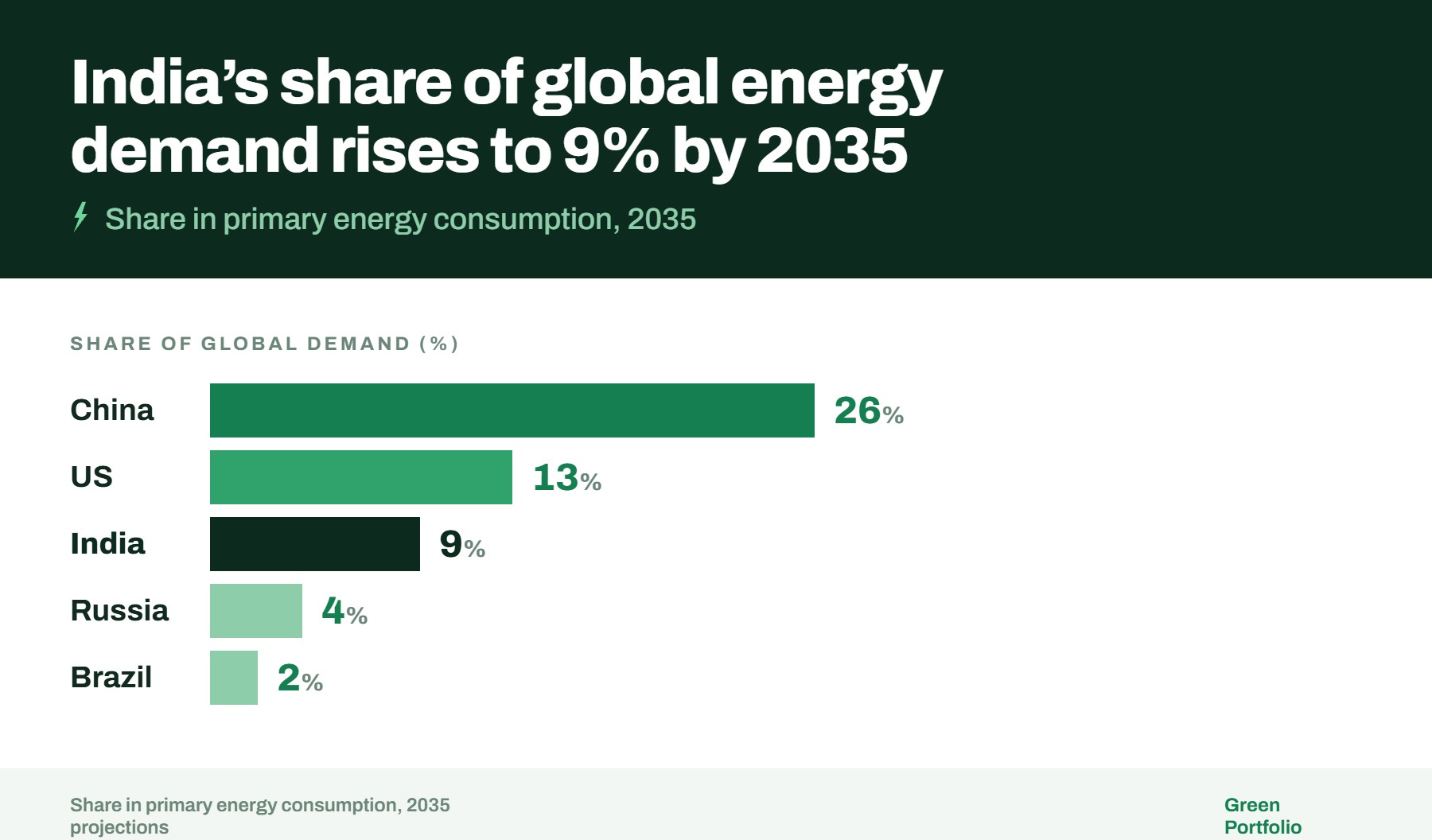
India is targeting 500 GW of non-fossil fuel capacity by FY30 and nearly 600 GW by FY32, creating demand across the renewable ecosystem, including solar modules, wind turbines, hydroelectric projects, and nuclear power.
Generation, however, is only one part of the equation. Electricity must also be stored and transmitted efficiently. Upgrading India’s ageing grid will require massive investments in transmission towers, wires and cables, transformers, inverters, Battery Energy Storage Systems (BESS), and smart grid infrastructure.
This creates opportunities not just for equipment manufacturers but also for component suppliers and raw material producers, making the power sector one of India’s largest investment ecosystems.
2. Defence

India’s defence industry is undergoing a structural transformation.
The Union Budget has consistently increased defence allocations over the years, with a growing share directed toward capital expenditure and domestic procurement. The Union Budget allocated capital of Rs. 7.85 lakh crore for FY27, marking a 15% YoY growth. At the same time, the government’s Aatmanirbhar Bharat initiative is steadily reducing dependence on imported defence equipment. The growth is industry wide across armed forces, aeronautics, and navy in the form of shipbuilding and submarines.
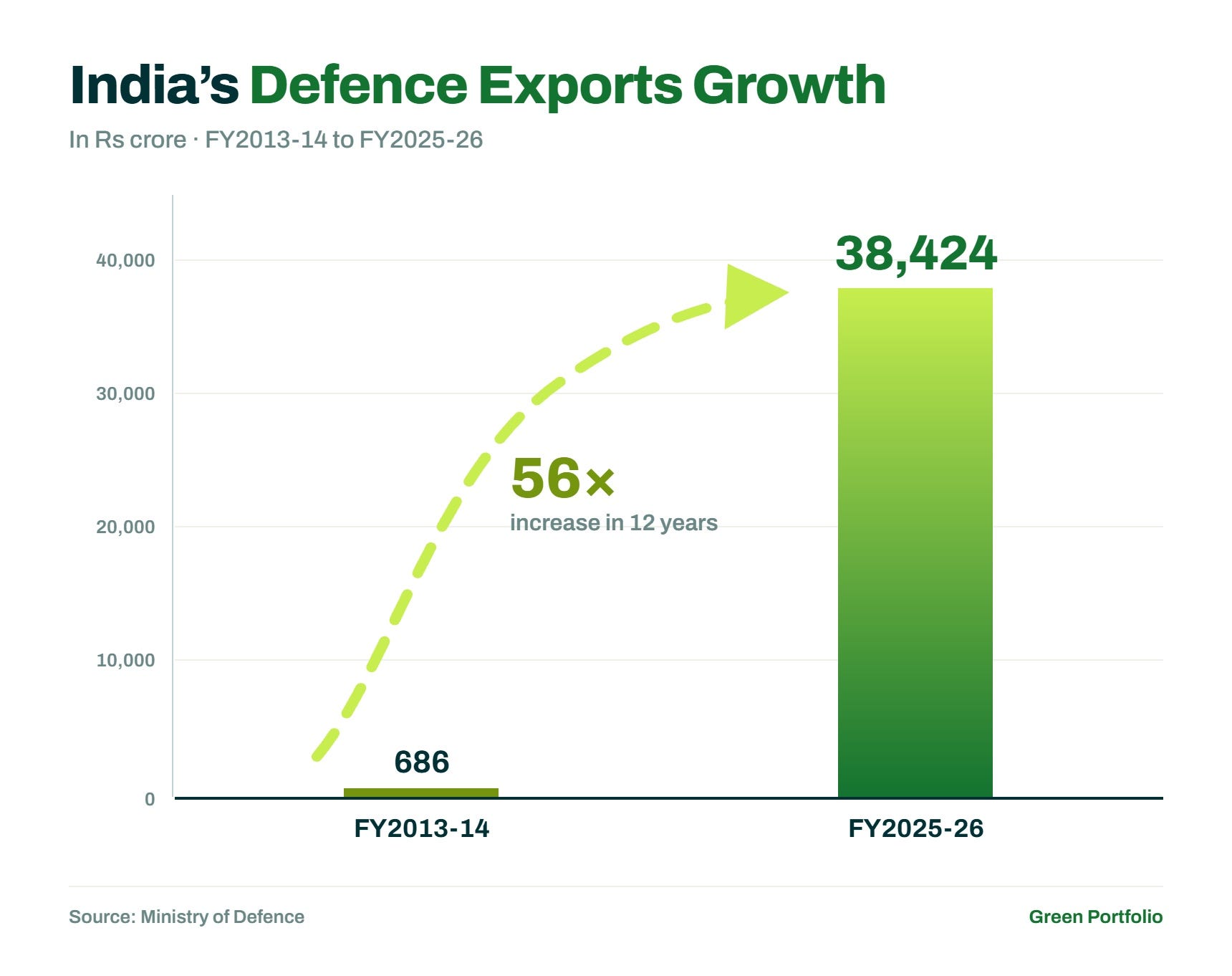
The results are already visible. India’s defence manufacturing has grown strongly in recent years, while defence exports have reached record highs. As a result, India’s defense manufacturing in FY26 stood at a record high of Rs. 1.78 lakh crore, a 16% YoY growth. Simultaneously, export is also a major opportunity with India exporting a record high Rs. 38,424 crore military hardware to 80 countries in FY26. An industry once dominated by public sector enterprises is now seeing rapid participation from private companies.
Unlike previous cycles, today’s opportunity extends across an entire ecosystem that includes:
Drones and unmanned systems
Missiles, artillery, and weapon systems
Defence electronics and radar
Naval and aerospace components
Ammunition and explosives
Precision engineering and specialized materials
As localisation increases and defence spending continues to rise, the beneficiaries will extend well beyond large defence contractors to hundreds of component manufacturers and engineering companies across the supply chain.
3. Railways

Indian Railways is entering one of the largest capital expenditure cycles in its history.
The government has announced investments of nearly ₹13 lakh crore to expand and modernize the railway network. The objective is not merely to build more railway lines but to create a faster, safer, and technologically advanced transportation system.
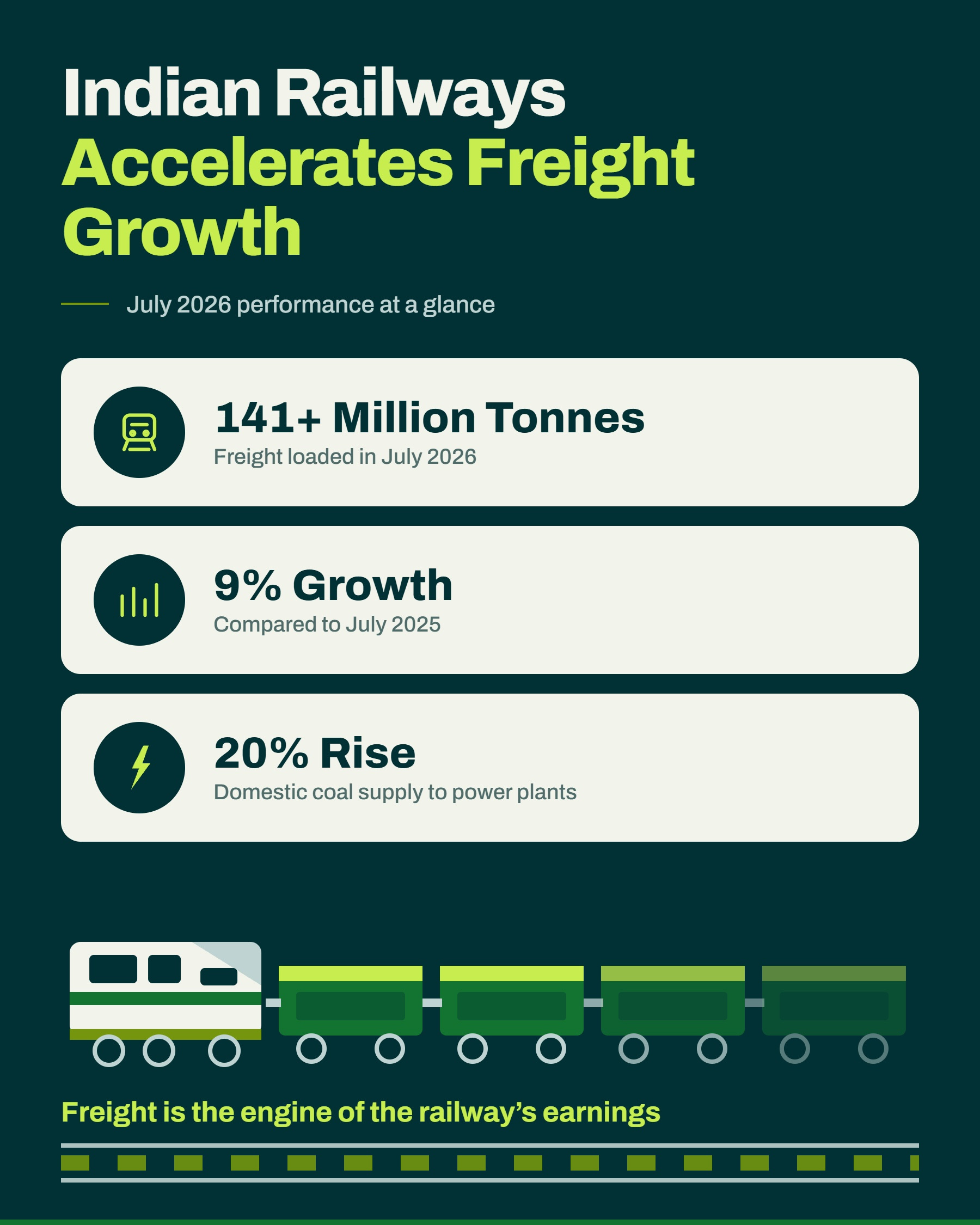
A significant portion of this investment will go toward expanding connectivity through new lines, track doubling, freight corridors, electrification, bridges, tunnels, station redevelopment, and signalling infrastructure. The railway ministry has sanctioned as much as 400 projects with the focus on enhancing freight modal share from the current 27% to 42% by the end of 2032. This would allow smooth movement of commercial freight in the country without putting additional pressure on the already congested highways of the nation.
At the same time, Indian Railways is undergoing premiumization. Vande Bharat trains, redeveloped stations, improved passenger amenities, and higher-speed rail corridors are transforming the travel experience while increasing demand for advanced railway equipment.
Modernization is also driving the adoption of next-generation technologies such as automatic train protection systems, advanced signalling, digital monitoring, predictive maintenance, modern propulsion systems, and high-efficiency electrical equipment.
This investment cycle creates opportunities not only for railway EPC companies but also for manufacturers of signalling systems, electrical equipment, rolling stock, cables, automation solutions, and specialized railway components.
The Bigger Picture
The common thread across all three sectors is simple. The government is not telling investors which stocks to buy. Instead, it is revealing where capital will be deployed over the next decade.
That information is invaluable during the idea-generation stage of investing. Government spending creates demand. Demand drives revenues. Revenues translate into earnings. And over the long term, earnings determine stock prices.
The next generation of multibagger companies may not emerge because of a single breakthrough product or a temporary market rally. They may emerge because they operate in sectors where the government has already committed trillions of rupees in long-term investment.
At Green Portfolio, we recognized these structural themes early and continue to position our portfolios to benefit from them. Our investment in Bharat Forge is a good example. Once known primarily for metal forgings, the company has strategically transformed itself into an integral supplier to India’s defence ecosystem, creating a completely new avenue of long-term growth.
We believe similar opportunities are now emerging across energy, defence, and railways as government investments reshape entire supply chains and encourage companies to expand into high-growth businesses. Our research team is continuously evaluating these sectors across industries, market capitalizations, and different layers of the value chain to identify the next generation of long-term wealth creators.

Investors looking to participate in these structural themes can do so through our PMS or our GDR Smallcase, where G stands for Green Energy, D for Defense, and R for Railways, three sectors we believe will remain at the forefront of India’s investment cycle for years to come.
Explore the Green Energy, Defence, Railways smallcase.
Disclaimer: This newsletter is for informational and educational purposes only and does not constitute investment advice or an offer or solicitation to buy or sell any securities. Views expressed are based on publicly available information as of the date of publication and may change without notice. Please consult a qualified financial adviser before making any investment decision.