
The most expensive four letters in investing
FOMO Investing = Bad Investing


Investing is one of the simplest things to understand, and one of the hardest things to practice.
The principles of successful investing have remained unchanged for decades: buy good businesses, understand what you own, stay invested through volatility, and remain patient when markets are gripped by fear. None of these ideas are revolutionary.
Yet, if you spend just a few minutes scrolling through financial news or social media, you’ll be greeted with headlines like “Stock hits upper circuit again,” “Once-in-a-generation investment opportunity,” or “The next 10-bagger the market hasn’t discovered yet.”
The flow of information never stops. Every day there is a new “hot stock,” a new theme, or a new opportunity that supposedly cannot be missed.
Over time, this constant stream of information creates an environment where investors stop making decisions based on research and start making decisions based on one emotion alone, the Fear of Missing Out (FOMO).
FOMO Isn’t Just an Investing Problem
FOMO isn’t unique to the stock market. It’s something we experience almost every day.
Take the recent Coldplay concerts in India as an example. Social media was flooded with videos, stories, and countdowns. Friends proudly posted screenshots of their tickets. Suddenly, people who couldn’t name more than one or two Coldplay songs found themselves desperately trying to buy expensive tickets.
No one was forcing them to attend. They simply didn’t want to be the only one missing out.
The same psychology influences where we eat, where we travel, the gadgets we buy, and even the hobbies we pick up. Humans naturally assume that if everyone else is excited about something, there must be a good reason.
In everyday life, this usually costs us a few thousand rupees. In investing, it can cost us years of savings.
FOMO Has Always Existed
Many people associate FOMO with Gen Z and social media, but markets have been driven by this emotion long before Instagram and YouTube existed.
The Dot-com Bubble of the late 1990s convinced investors that every internet company would become the next Microsoft. The real estate boom before the Global Financial Crisis made people believe property prices could only move in one direction.

The stories changed. The emotion never did. Today, the same pattern repeats itself.
A friend tells you his investment in ABC Ltd. has gone up five times. Television anchors discuss the company’s spectacular rally every evening. Social media is filled with screenshots of extraordinary profits.
Soon, even people who have never heard of the business begin investing.
Not because they understand what the company does. Not because they have studied its financial statements. Not because they have evaluated its valuation. They invest simply because everyone else seems to be making money. More often than not, that is how investment mistakes begin.
One of the Most Common Investing Mistakes
FOMO investing is perhaps one of the most common mistakes made by investors. The irony is that there is often a perfectly rational explanation behind a stock’s rise.
A company may be reporting strong earnings growth. It may have commissioned a large capacity expansion that significantly improves profitability. It could be benefiting from favourable industry tailwinds or government initiatives such as Production Linked Incentive (PLI) schemes. Sometimes, the market simply realizes that the company deserves a higher valuation, leading to a valuation re-rating.
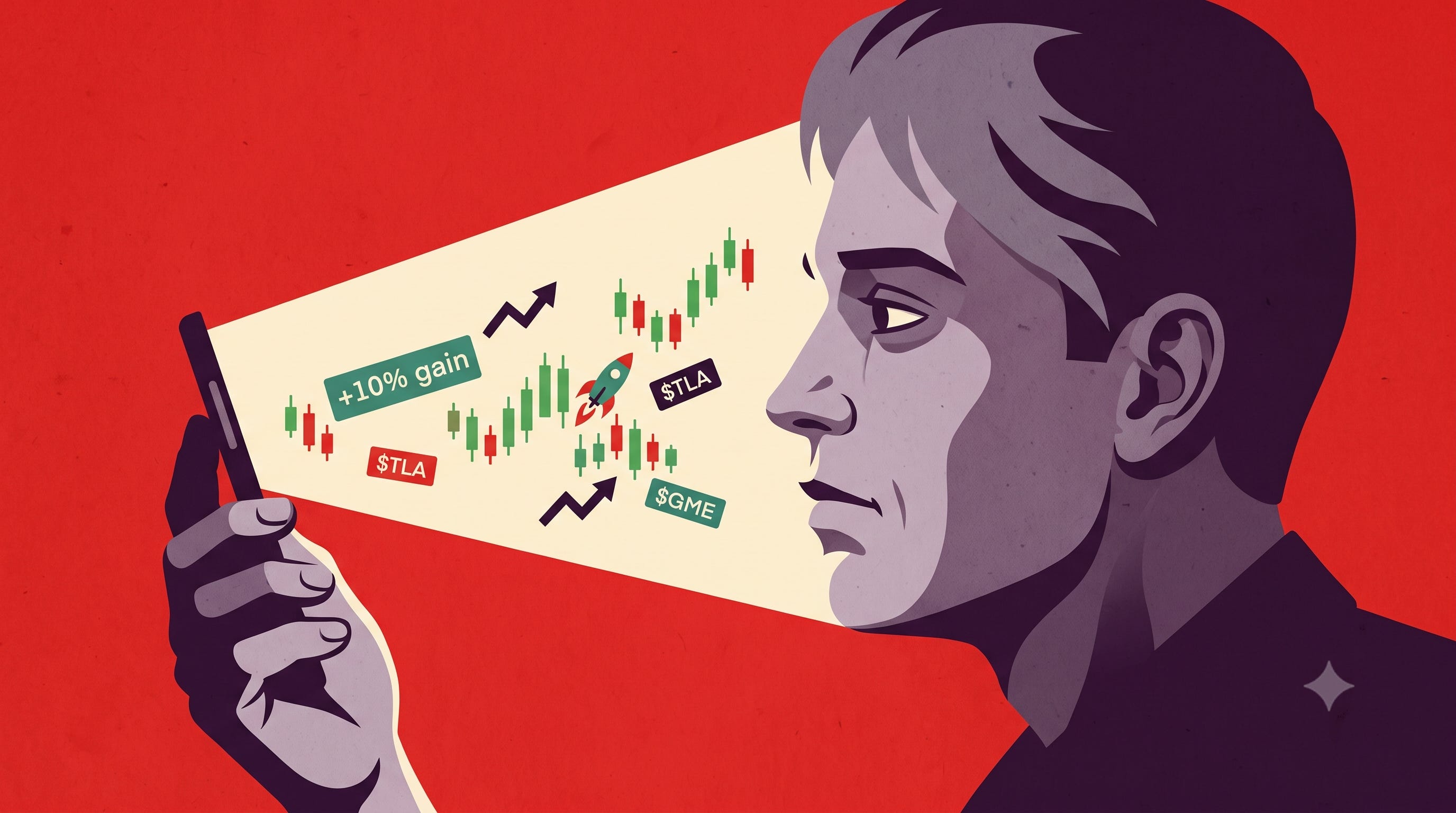
And occasionally, prices rise for reasons that have little to do with fundamentals at all, as witnessed during the meme stock frenzy.
The point is not that rising prices are always irrational. The problem arises when investors never bother to understand why prices are rising. Every listed stock represents a real business with factories, employees, customers, products, competitors, cash flows, and management teams making decisions every single day.
Unfortunately, during bull markets, many investors forget this simple truth. They stop analysing businesses and start chasing ticker symbols.
Recent Examples of FOMO
Gold and Silver Mania
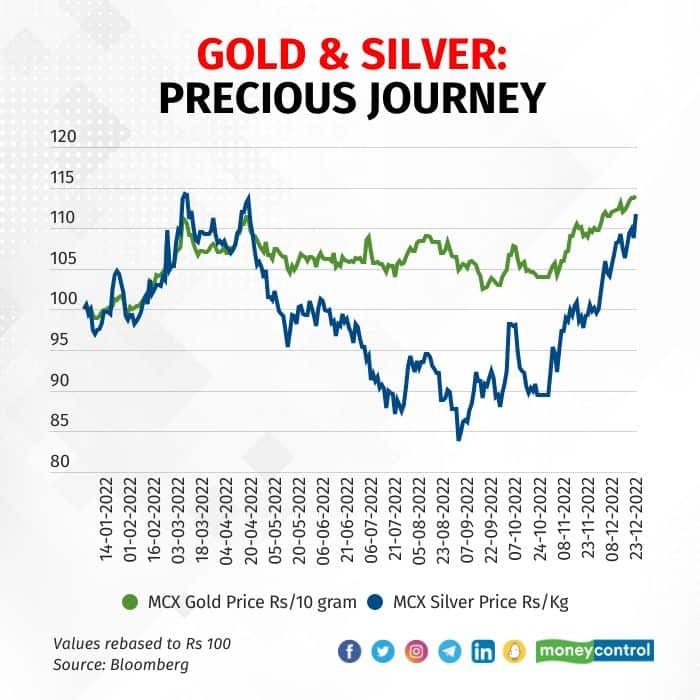
Gold and silver witnessed extraordinary rallies during 2025.
By the end of the calendar year, gold had risen roughly 45%, while silver had surged an astonishing 150%. Financial media covered the rally almost daily, influencers discussed precious metals relentlessly, and ETF inflows accelerated as investors rushed to participate.
The excitement became so widespread that even non-investors who had never invested in the stock market, asked me how Gold ETFs worked because they had been watching videos on social media and didn’t want to miss the opportunity.
Nothing had fundamentally changed about their investment philosophy. They simply didn’t want to be left behind.
Since then, both gold and silver have corrected meaningfully, reminding investors that no asset moves in a straight line forever.
The KOSPI Rally
Another recent example came from South Korea.
While Indian equity markets struggled after peaking in September 2024, South Korea’s KOSPI Index became one of the best-performing equity markets globally, driven largely by enthusiasm surrounding artificial intelligence and semiconductor companies.
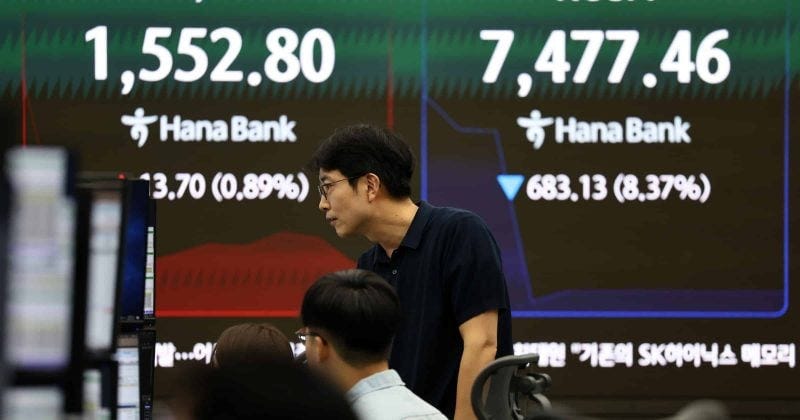
The strong returns naturally attracted global attention. At one moment the index was up almost 200% since the beginning of 2025. We received numerous questions from investors asking how they could invest in the KOSPI, worried they were missing the next big opportunity.
Yet, markets have a habit of humbling investors.
Not long after the rally, the KOSPI suffered two sharp declines of around 10% within a month, severe enough to prompt an emergency response from South Korean authorities and reignite concerns about excessive speculation.
The same market that everyone wanted to enter suddenly became the market everyone wanted to avoid. Nothing demonstrates FOMO better than that.
The AI Rally in the US

Another recent example that comes to the mind is the rally seen in the tech stocks of the US, especially in the companies that manufacture storage memory chips like Sandisk and Micron. Both the companies have benefited immensely from the massive ongoing investments in data centers as they simply cannot function without memory chips, also referred to as DRAM (Dynamic Random Access Memory).
The stock of both the companies were shooting up faster than NASA’s rockets. At one point Micron’s share was up 12x and Sandisk was up a whopping 52x within just a year. It was the kind of rally that could have made you a millionaire if entered at the right time. But, notice that we say “could” and not “can”. The reason? Just like all other businesses, Micron and Sandisk have started facing supply constraints, costs of setting up data centers are getting higher and execution is slowing down.
Both the stocks today trade at roughly 30% lower than their peak, which was achieved in June 2022. Interestingly, the euphoria for these stocks was so high that a special DRAM ETF was created in April 2026 and within just three months it attracted an AUM exceeding $20 billion. Investors were sure that this rally would continue indefinitely but by April 2026 the stocks were already being termed “overvalued” because of the unimaginable stock price increase in the previous year.
The Golden Rule
Markets move in cycles. No trend continues forever. Assets that rise rapidly eventually experience periods of correction, consolidation, or even prolonged declines. Likewise, deeply unpopular sectors eventually become attractive again.
It’s okay if you missed a stock which has turned multibagger because it doesn’t harm your financials. What will hurt you more is to invest in a stock that has already run out of steam and preparing to nosedive from its peak. New opportunities arrive in the stock market every other year. People often point at the dips during the COVID-19 pandemic as a golden period to invest, but the opportunity did come again as well.
The Indian markets corrected significantly in 2023 because of slow economic growth, then again in April 2024 after Indian election results, then again after September 2024 because of high valuations, then again in April 2025 when the US President Donald Trump imposed tariffs on India, then again in August 2025 when the tariffs were raised, and now we see a similar situation because of the West-Asia conflict.
The market presents plenty of investment opportunities but in a scattered timeline. The unfortunate reality is that FOMO investors usually arrive at the very end of the story, not at the beginning. They buy after years of spectacular returns, just when expectations have become unrealistic and optimism has reached its peak.
From that point onwards, the probability of disappointment increases significantly.
Successful investing is not about buying what everyone else is buying.
It is about understanding what you are buying, why you are buying it, and whether the underlying business justifies the price you are paying.
After all, the advice our parents gave us in school still applies remarkably well to investing:
Don’t give in to peer pressure.
Disclaimer: This newsletter is for informational and educational purposes only and does not constitute investment advice or an offer or solicitation to buy or sell any securities, including in any public issue. Views expressed are based on publicly available information as of the date of publication and may change without notice. Please consult a qualified financial adviser before making any investment decision.