
India Makes the Product. Someone Else Makes the Parts.
The quiet gap hiding inside almost everything you own.


Look around the room you are in right now.
The chair you are sitting on. The casing of the fan above you. The switchboard on the wall, the body of the water purifier, the dashboard of the car parked outside. Almost every object around you has a piece of moulded plastic holding it together.
Now here is the uncomfortable part. For most of the last two decades, a large share of that plastic was not made in India. It was imported.
In 2024 alone, India bought close to $6.29 billion worth of plastics from China. That is one country, one category, one year. Across all sources, India remains a consistent net importer of plastics, despite being one of the fastest-growing consumers of them on earth.
We learned to assemble almost anything. We are still learning to make the parts that go inside.
The Country That Assembled Without Making
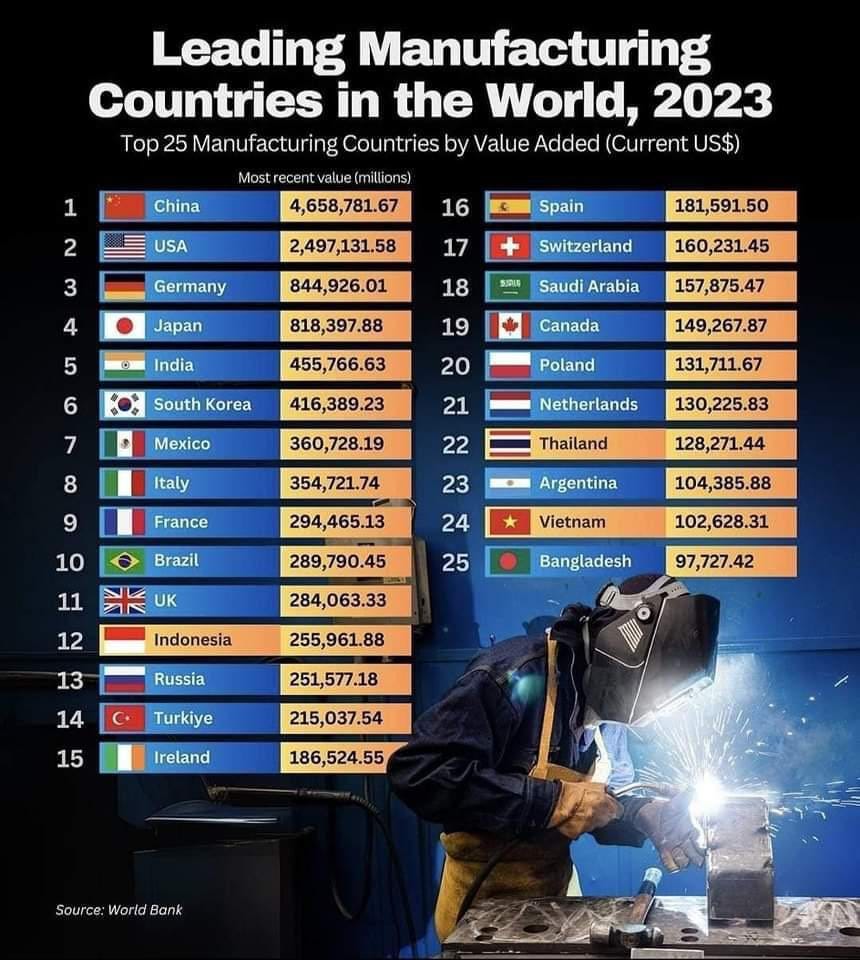
For years, the Indian growth story was an assembly story.
We were very good at the final step. We put the television together, bolted the furniture, fitted the car, packaged the appliance, and stamped “Made in India” on the box. What we were not building was everything that went in before that final step. The components. The sub-assemblies. The precision-moulded brackets, housings, clips and bases that the finished product simply could not exist without.
Those came from somewhere else. Usually China, sometimes Southeast Asia, occasionally Korea or Taiwan for the higher-grade stuff. We paid for them in foreign currency, gained no domestic capability, and quietly accepted that the guts of our manufacturing belonged to someone else’s factory.
The numbers told the story plainly. In a single year, India’s import of finished plastic products jumped by more than 50%. An industry body had to publicly ask the government for protection, because cheaper imported components were undercutting local makers inside India’s own market.
A country can grow for a long time as an assembler. But it stays fragile. Every supply shock, every shipping delay, every diplomatic flare-up with a supplier nation lands directly on your factory floor. You do not control your own product. You control the last 10% of it.
The Trigger That Changed The Math
Then the world reminded everyone how fragile that arrangement was.
The pandemic froze supply chains overnight. Geopolitics turned a routine import into a strategic risk. Freight costs spiked, lead times stretched, and a generation of Indian manufacturers learned the same lesson at the same time: a component you cannot make yourself is a dependency you cannot defend.
The response has been slow, unglamorous, and very large. Make in India put import substitution at the centre of policy. Plastic parks are being built across states. Skilling institutes for polymer engineering have multiplied. The plastics industry itself is openly lobbying for the same PLI support that transformed electronics and pharma, because everyone can now see where this is going.
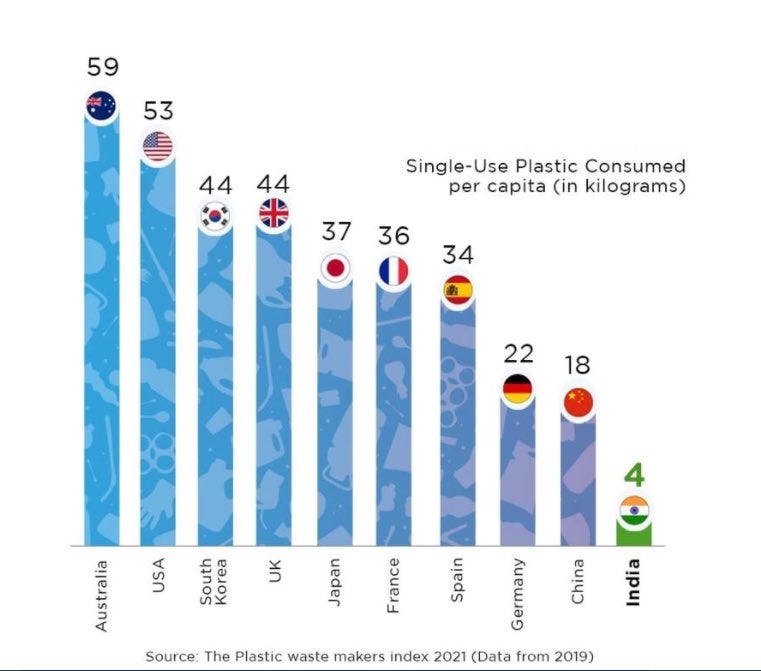
And the runway is enormous. India’s per capita plastic consumption sits at roughly 11 kg. The global average is around 28 kg. India’s converted-plastics market, valued at about $26 billion today, is expected to reach $44 billion by 2030, a roughly 10-11% annual growth rate. That is not a mature market defending its turf. That is an early one, deciding right now who gets to build the next decade of it.
But Here Is Where The Story Actually Changes
The interesting shift is not happening at the policy level. It is happening at the company level.
A new layer of Indian suppliers has stopped behaving like raw-material traders and started behaving like engineering partners. They are not just moulding a part to spec. They are co-designing the mould, prototyping with the customer, owning quality, and embedding themselves so deeply into an OEM’s production line that switching them out becomes more expensive than keeping them. That is the moment a commodity supplier turns into a moat.
To understand what this looks like from the inside, consider Atharva Polyplast.

Founded in Satara, Maharashtra, the company makes precision injection-moulded components from polypropylene, ABS and engineering polymers, supplying OEMs and Tier-1 customers across furniture, home appliances and automotive assemblies. It does not sell to consumers. It sits one layer behind the brands that do. The kind of company nobody photographs, sitting inside the products everybody buys.
What makes it worth a closer look is the trajectory. Three years ago this was a thin-margin job shop earning under a crore in profit. By the most recent year, profit had crossed five crore and margins had moved from low single digits into double digits, on roughly the same scale of revenue. That is operating leverage and discipline doing their quiet work, the exact shape we hunt for in our own research.
We sat down with the founders of Atharva Polyplast on the Green Portfolio Podcast, ahead of the company’s SME listing, to hear exactly how a component maker climbs that curve. If you want to understand India’s component-layer story from inside a company actually living it, this is the conversation to listen to.
The Honest Gap
This is also where the story has to slow down, because anyone telling you India has solved this is selling you something.
We have learned to process plastic. We have not fully learned to make it. India still imports the high-grade engineering polymers, the specialty resins, and a good deal of the raw material that domestic component makers depend on. We are excellent at converting and assembling. We are still building the upstream and the high-end chemistry that sits above it.
The supplier layer is real, but it is young. Most of these companies are small. Many lean heavily on a handful of large customers and a single facility. They are working-capital hungry, exposed to polymer-price swings linked to crude, and they have to keep proving they can widen their base without losing the relationships that got them here.
India is winning the assembly story. It is in the early innings of the component story. Those are different things, and the distance between them is still measured in billions of dollars of imports every year.
Why This Matters For Investors
For a long time, the only way to invest in a consumption boom was to buy the brand. The visible name. The company on the advertisement.
The quieter opportunity has always been one layer behind it. The supplier who sells to every brand instead of competing with them. The component maker who benefits whether furniture brand A or furniture brand B wins, because both buy from the same moulder. As India localises what it used to import, that supplier layer is where a lot of durable, unglamorous value is going to be created.
This is the lens we apply across our own research. Not the headline. The supply chain behind it. The enablers, the component makers, the businesses that quietly compound while the market watches the brand.
The Closing Thought
The next time you pick up something “Made in India,” look closer at what is actually holding it together.
For most of our history, the answer was: a part made somewhere else. That is finally starting to change, slowly, in factories most people will never visit, built by companies most people will never hear of.
The label on the box has said “Made in India” for years. What is finally beginning to be true is the part you cannot see.
Disclaimer: This newsletter is for informational and educational purposes only and does not constitute investment advice or an offer or solicitation to buy or sell any securities, including in any public issue. Views expressed are based on publicly available information as of the date of publication and may change without notice. Please consult a qualified financial adviser before making any investment decision.