
India Is Now World's 5th Top Military Spender.
But Do We Really Need It?

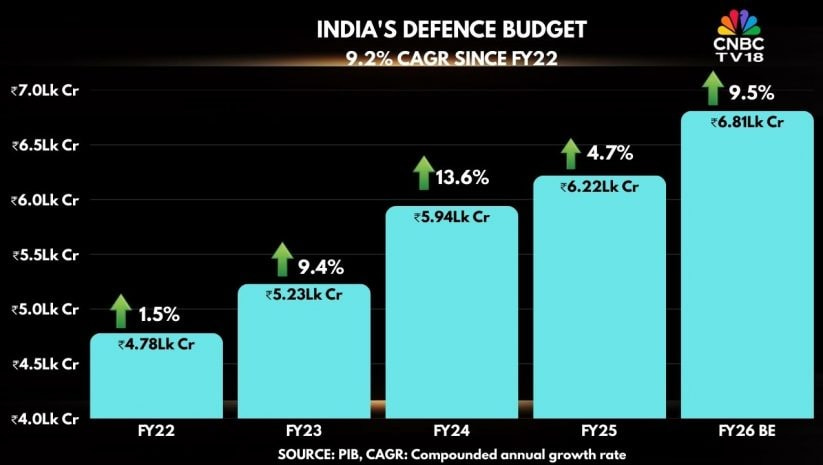
₹6.81 lakh crore.
That’s what India spent last year on defence. Personnel salaries. Pensions. Equipment. Maintenance. Training. Procurement.
It is 1.9% of GDP. It is more than 1.5 times what we spent on education. It is over three times the central government’s healthcare allocation.
So the question deserves to be asked seriously, not dismissed: do we actually need to spend this much?
The World That Made This Necessary
Before answering, it’s worth stepping back from India for a moment.
Global military expenditure hit a record $2,887 billion in 2025, the 11th consecutive year of growth. The United States spent $954 billion. China spent $336 billion and is growing its defence budget at 7.4% annually. Russia, three years into the Ukraine war, is now spending 7.5% of its entire GDP on defence. NATO members across Europe are scrambling to hit the 2% GDP threshold they ignored for decades.
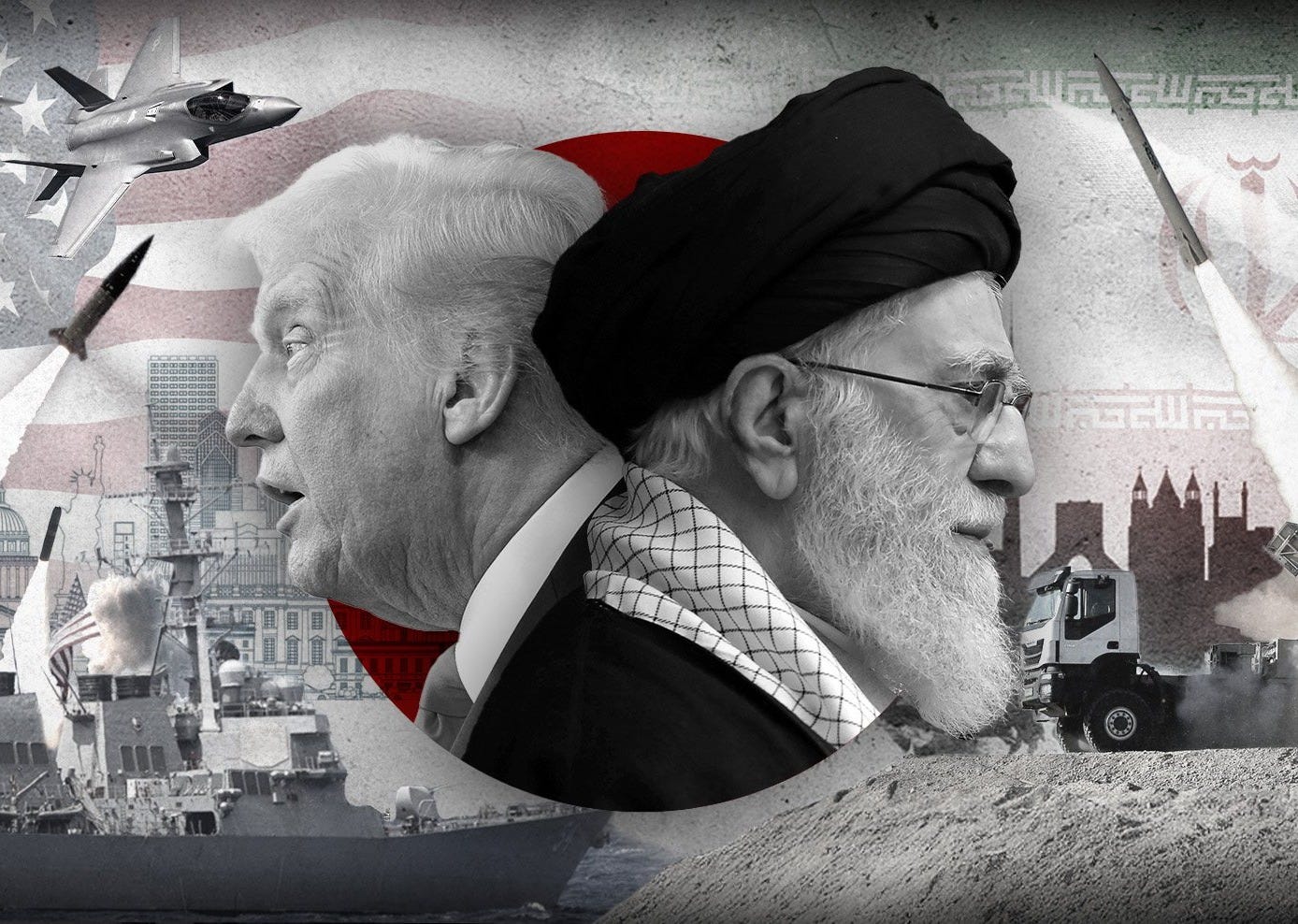
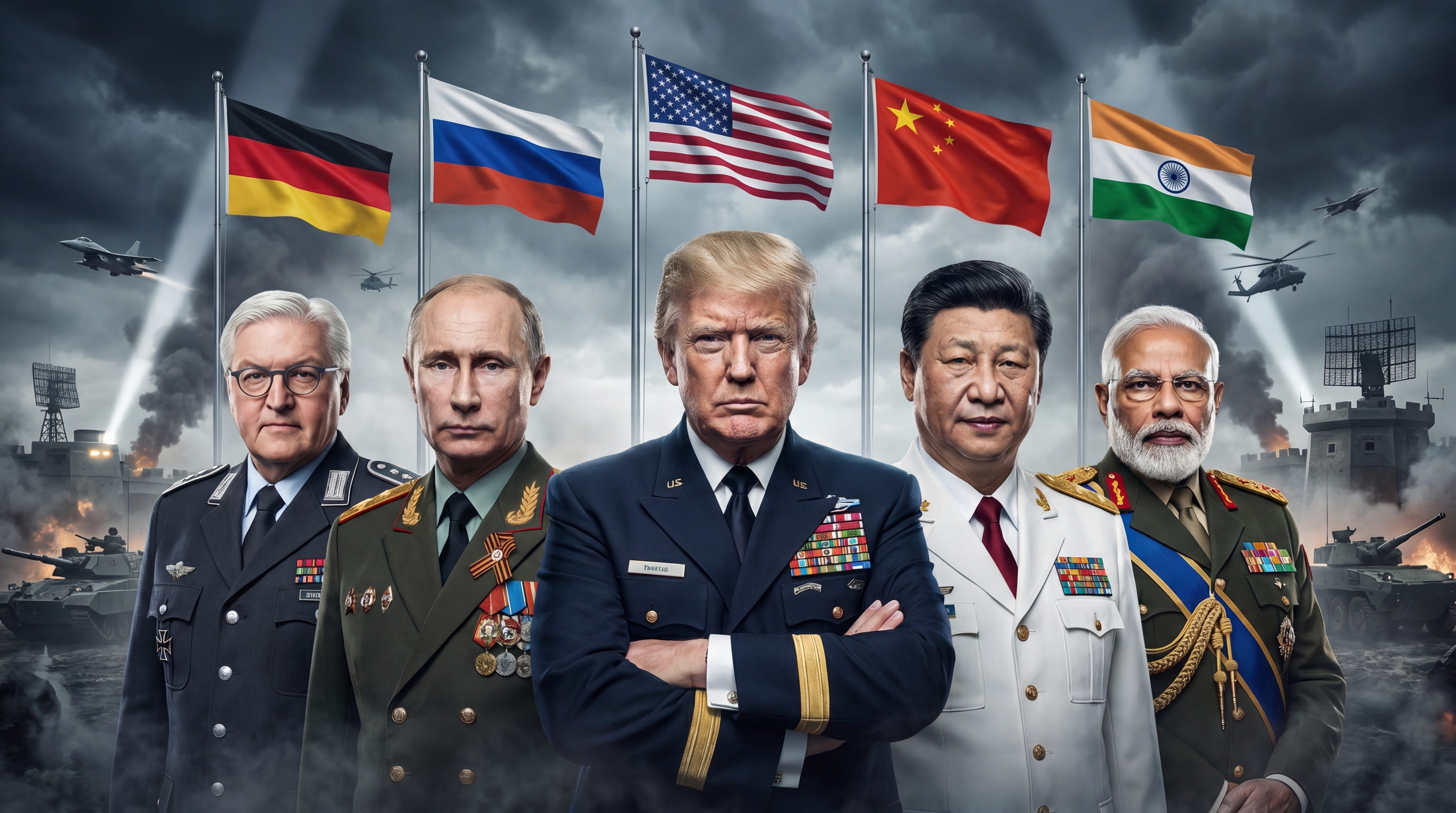
This is not an India story. This is a world rearming.
The world India grew up in, where great powers maintained a fragile peace and smaller countries could shelter under it, is over. Every major democracy is rethinking what it means to be secure in an era where the rules no longer hold and the assumptions no longer apply.
India’s ₹6.81 lakh crore is the response to a world that changed. Not a choice made in isolation.
The Trigger Closer To Home
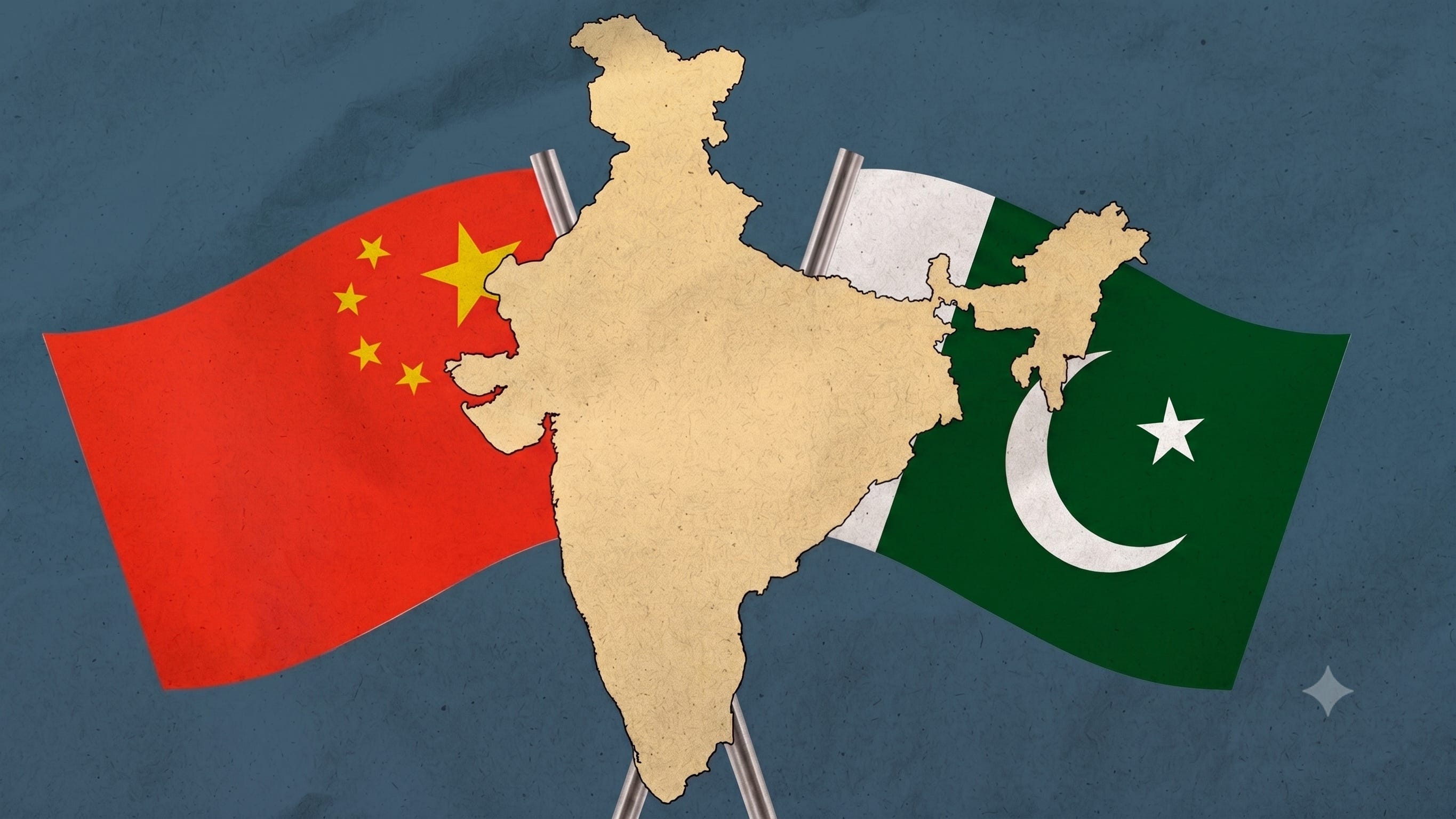
“We live in perhaps the most troubled neighbourhood in the world,” former Home Minister P. Chidambaram once said.
That isn’t rhetoric. It’s geography.
India shares borders with two nuclear-armed adversaries, sits next to one of the world’s most unstable regions, and has watched political turmoil across South Asia spill into its own territory repeatedly over the last decade.
The most recent reminder came in April 2025: the Pahalgam terror attack. India’s response, Operation Sindoor, used combat aircraft, drones, and missile systems in a coordinated strike on Pakistan’s military and terror infrastructure. The cost: roughly ₹700 crore in ammunition, deployment, and operational expenses.
That ₹700 crore was a price paid for an outcome. No Indian lives lost on home soil, no property damaged on Indian streets, and a clear signal sent.
But none of it would have been possible without the years of spending that came before. The drones, the fighter jets, the anti-aircraft systems, the trained personnel, all of it sat ready because someone, somewhere in a budget meeting, agreed it was worth paying for in peacetime.
National security is the foundation everything else rests on. You cannot compound wealth, build companies, or run a growing economy in a country that cannot defend its borders. The economic ambition we celebrate every day depends on a layer of protection most of us never see.
But Here Is Where The Story Actually Changes
This is the part most people miss.
Defence spending in India used to mean money leaving the country. Rafale jets from France. Bofors guns from Sweden. Russian tanks. Israeli drones. We paid premium prices, gained no domestic manufacturing capability, transferred no technology, and granted foreign governments quiet leverage over us, because every spare part, every upgrade, every software patch had to come from them.
That model is being dismantled.
Defence production in India reached ₹1,54,000 crore in FY 2024-25, up from ₹46,429 crore in 2014-15. That is a 174% increase in a decade. It is not inflation. It is real industrial output, built domestically, by Indian engineers.
What’s being built has changed too. The Tejas fighter jet is operational. The Prachand light combat helicopter is deployed at altitudes above 5,000 metres. The BrahMos missile is being exported to the Philippines and Indonesia. The Akash air defence system is in active service. Operation Sindoor itself was executed using indigenous drones, indigenous air defence, and indigenous electronic warfare systems.
And here is the detail most readers will not know, the part that signals a genuine structural shift rather than a government talking point.
The private sector now contributes 45% of India’s defence exports. Tata. Larsen & Toubro. Mahindra. These are not state contractors filling forms. They are companies building real defence platforms competing in global markets. Over 16,000 MSMEs are now part of India’s defence ecosystem, supplying components, sub-assemblies, and specialised technology to the prime integrators above them.
India now exports defence equipment to 80+ countries, with exports reaching ₹38,424 crore in FY 2025-26, a 62.66% jump from the previous year and a roughly 56-fold increase from 2013-14.
The budget line still says ₹6.81 lakh crore. What sits behind that number has fundamentally changed.
To understand what this transformation looks like at the company level, consider Merritronix.
Founded in Hyderabad in 1988, the company builds the electronics inside India’s critical defence systems: missile seeker assemblies, airborne radar, and aircraft DVRs. It has been an approved supplier to BEL since 2009 and HAL since 2012, and exports to Europe through Honeywell Aerospace. The kind of company that doesn’t make headlines but sits inside the platforms that do.
We recently sat down with Dovari Amarnath, Founder and MD of Merritronix, on the Green Portfolio Podcast, ahead of the company’s ₹70.03 crore IPO opening in June 2026 on the BSE SME platform. If you want to hear what India’s defence indigenisation actually looks like from inside a company doing the work, this is the conversation.
The Honest Gap
This is also where the story has to slow down, because anyone who tells you India is now self-reliant in defence is selling you something.
According to SIPRI, India remains the world’s second-largest defence importer, accounting for 8.6% of global arms imports. For context, China has brought its share down to 1.3% from 4.3% in 2015. They have aggressively built what we are still constructing.
The gap shows up most clearly in research. China spends 14-15% of its defence budget on R&D. India spends 5-6%. That gap is not a footnote. It is the reason India’s Tejas fighter jets still fly on imported engines. It is the reason critical components in our drones, advanced semiconductors, and electronic warfare systems continue to come from abroad. We have learned to assemble and integrate. We are still learning to invent at scale.
India is winning the indigenisation story. It has not yet won the self-reliance story.
Those are different things, and the distance between them is still measured in billions of dollars of imports every year.
So Do We Need It?
The question deserves a real answer.
The India of 2005, which spent billions importing weapons from foreign capitals, created no domestic industry, generated no jobs, and gave other governments leverage over our supply chains every time we needed a spare part, probably deserved more scrutiny than it got.
The India of 2025 is spending the same kind of money, but doing something different with it. It is turning a national security expense into a domestic manufacturing renaissance. It is building 16,000 MSME suppliers across the country. It is exporting to 80 countries. It is creating engineers, factories, and capabilities that strengthen both the armed forces and the economy at the same time.
The answer is yes. But the more honest question is: are we spending it right?
And increasingly, the answer is yes.
Why This Matters For Investors
For decades, defence was the exclusive domain of government PSUs (HAL, BEL, BDL), companies with guaranteed contracts, predictable margins, and limited urgency to innovate. That structural setup has been broken.
The government has done something it rarely does: it has created guaranteed long-term domestic demand. Positive Indigenisation Lists now contain items that cannot be imported. They must be sourced from Indian manufacturers. The export target is ₹50,000 crore by 2029. Of the 193 defence contracts signed in FY 2024-25, the highest ever in a single year, 177 went to domestic players.
This is not a policy cycle that can reverse with the next election. It is a decade-long structural commitment that has bipartisan support, geopolitical necessity, and economic logic behind it.
The companies positioned inside this ecosystem, across manufacturing, electronics, aerospace, materials, and precision components, are building something with very few parallels in Indian industrial history: a government-mandated, domestically-sourced, globally-exported industry.
That is a different kind of moat than anything India’s previous growth stories produced. It cannot be undercut by cheaper foreign competition. It cannot be replaced by AI. It cannot be defunded by a change in administration.

This is the thesis behind our GDR smallcase, a curated portfolio of companies building India’s defence and strategic manufacturing backbone. Not the headlines. The supply chain behind them.
Explore the Green Energy, Defence, Railways smallcase.
The Closing Thought
₹6.81 lakh crore is a lot of money.
The question was never whether it’s a lot. The question was whether it’s being spent on something real.
For the first time in India’s post-independence history, a growing share of that number is being spent on factories built here, by engineers trained here, supplying armed forces that increasingly fight with equipment they own, and exporting the surplus to a world that is rearming alongside us.
That is a different country than the one that imported Bofors guns in the 1980s.
The budget line looks similar. What’s behind it has fundamentally changed.
Disclaimer: This newsletter is for informational and educational purposes only and does not constitute investment advice or an offer or solicitation to buy or sell any securities. Views expressed are based on publicly available information as of the date of publication and may change without notice. Please consult a qualified financial adviser before making any investment decision.