

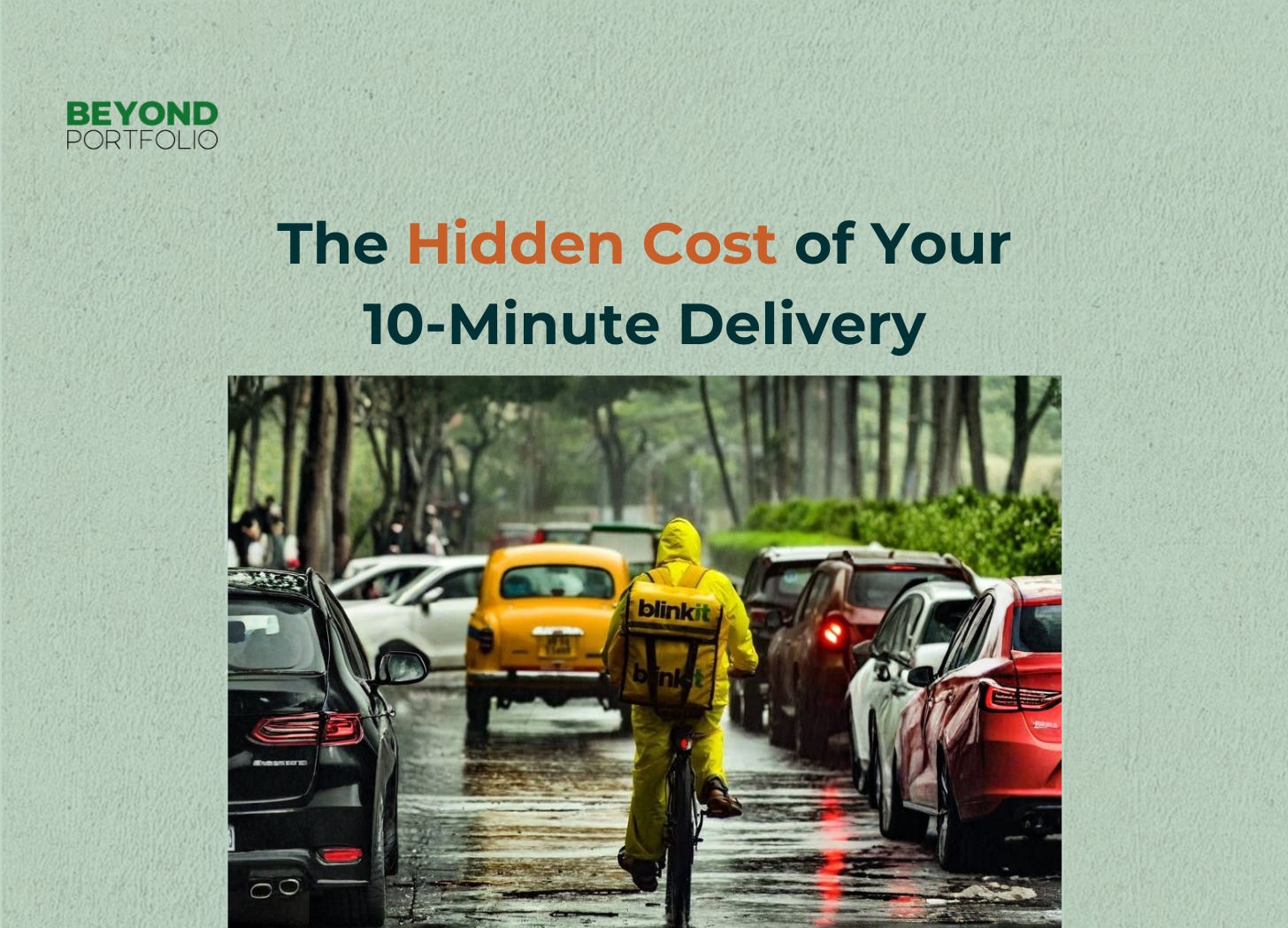
The value of convenience has never mattered more than it does today. Everything from your dinner to your household repairs to your groceries is being handled by a ‘contractor’. And that single word is doing an enormous amount of legal and financial heavy lifting for the platforms that employ them. Labelling gig workers as contractors, rather than employees, is what allows these platforms to keep their cost structures intact, their margins defensible, and their path to profitability credible. That assumption is now showing signs of cracking. And when it breaks, it will not show up as a headline. It will show up as a line item in a quarterly result.
Across India, more than 8 million gig workers are contracted on a daily basis, squeezing in as many deliveries and service calls as possible to earn more. They are the backbone of an industry built on borrowed VC money and the promise of infinite scale.
The Platforms That Sell You Convenience
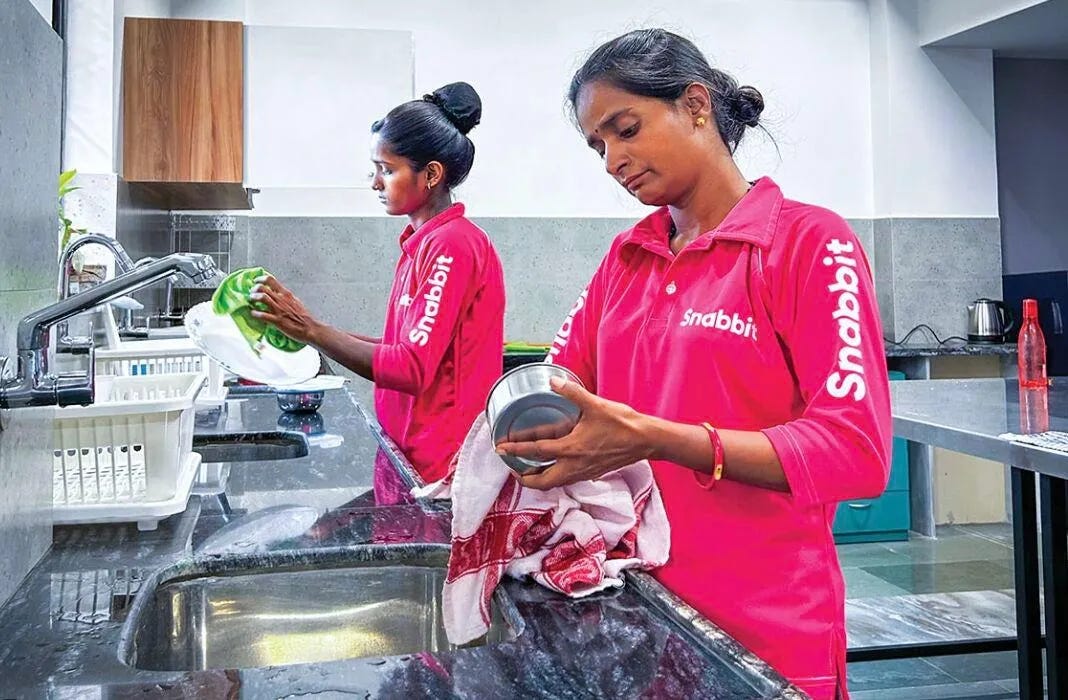
Post-pandemic, Indians have gotten used to paying for convenience. These organized gig platforms have taken that to a level not seen before. You know most of them, but their business models are not all the same:
Pronto: On-demand household help, aiming to organise the highly decentralised domestic help market. Currently unlisted, operating in select metros and growing fast.
Snabbit: Home services and hyperlocal delivery, positioned on worker quality and reliability over pure speed. Unlisted.
Urban Company (UC): Home services marketplace covering beauty, repairs, and cleaning. Has deliberately moved toward a partner and franchise model rather than pure gig. Unlisted, but the most instructive business model in the sector.
Zomato and Swiggy: The listed anchors. High delivery volumes, thin margins, and the most exposed to any structural shift in worker classification.
The Assumption Beneath Every Delivery
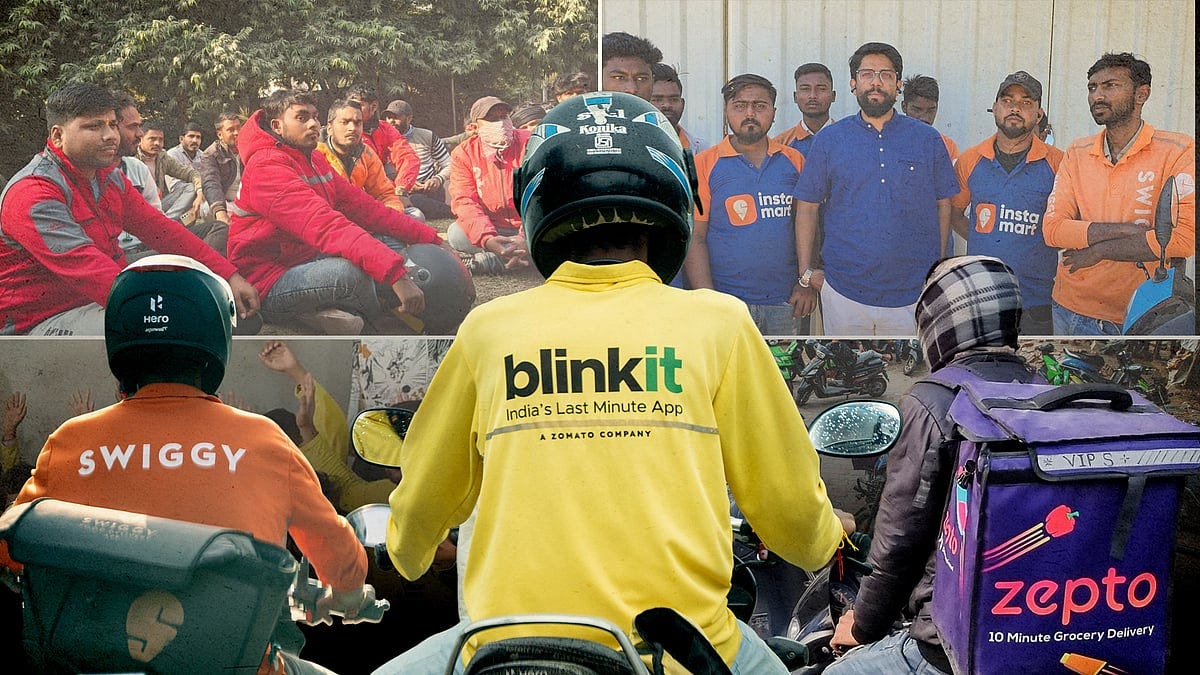
Each gig worker on these platforms is paid on a per-gig basis. The cost structure is built on one foundational idea: labour is variable, not fixed.
A delivery partner costs the platform roughly ₹60–80 per delivery in effective payout including incentives, with no obligation for PF, ESI, gratuity, paid leave, or minimum wage protection
When order volumes fall, labour costs fall automatically. The platform carries no fixed payroll obligation
Contribution margins, EBITDA paths, and investor projections all assume this structure holds
If workers become employees, the entire stack changes:
PF contribution: 12% of wages (employer share)
ESI: 3.25% of wages
Gratuity accrual after 5 years
Paid leave entitlement
Potential minimum wage floor application
Conservative estimates suggest employment classification could raise effective per-delivery labour costs by 25–40%. At Swiggy and Zomato’s current delivery volumes (hundreds of millions of orders per quarter) this is not a rounding error. It is a structural margin shift.
Why This Is Being Tested Now
This is not one incoming policy shock. It is three pressures arriving simultaneously.
1. Policy direction
The Code on Social Security 2020 includes provisions for gig and platform workers. Rajasthan has passed its own gig worker protection law, though implementation is still pending. Karnataka attempted legislation and partially retreated. The direction of travel is clear even if the timeline is not. This is a 2-3 year risk, not a next-quarter one. But platforms that are still building as if this pressure does not exist are making a bet that is getting harder to justify.
2. Platform competition driving up worker costs
With Pronto, Snabbit, Zepto, Porter, and others competing for the same pool of delivery and service workers, effective worker earnings are rising anyway through incentives, bonuses, and retention schemes. Formalisation may end up formalising costs that are already climbing informally.
3. Worker supply tightening
As awareness of gig work’s limitations grows among workers, acquisition and retention costs are rising. The era of abundant, cheap gig labour willing to work for minimal incentives is ending.
What This Means for Zomato and Swiggy Investors
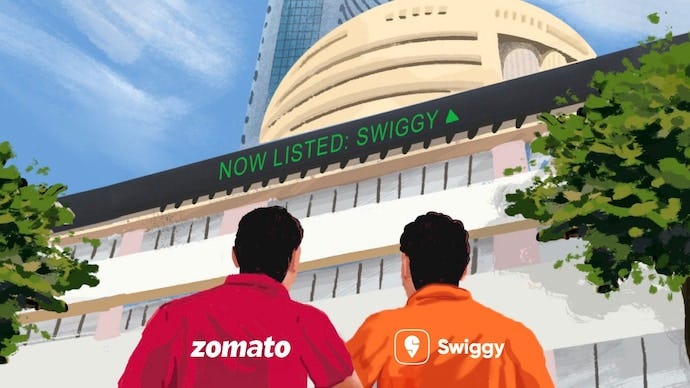
This is where the story hits the listed markets directly.
Both platforms’ path to sustained profitability relies on contribution margins holding as order volumes grow — the operating leverage story
If labour costs rise 25–40% through formalisation, that operating leverage story changes materially
The market is not pricing this risk explicitly yet — there is no visible formalisation risk discount in how either stock trades
Watch the delivery cost per order in quarterly results. That single line is the clearest barometer of whether compliance costs and worker classification pressures are already feeding through
The Outlier: Urban Company
Urban Company offers the most honest answer to formalisation in the sector, and it has been building toward it for years.
UC moved deliberately toward a partner model: workers invest in their own tools and kit, complete UC’s training and certification, and operate more like franchisees than employees
UC partners carry higher upfront investment, more ownership of their earnings, and more skin in the game
The tradeoff is real: worker acquisition is slower and more expensive. But churn is lower, service quality is higher, and the formalisation question looks structurally different because the relationship is already closer to a business partnership than a contractor arrangement
The question for the broader sector is whether UC’s model becomes the direction everyone else is forced to move toward — willingly or not.
Who Is Most Exposed
Most vulnerable to formalisation cost risk:
Zomato and Swiggy: high volume, thin margins, pure delivery model
Any new platform competing on price rather than worker quality
Better positioned:
Urban Company: partner model already absorbs the regulatory direction
Pronto and Snabbit: if their quality-first, higher-earning worker model is genuine, they may be structurally closer to what survives regulation
The sector-level trigger to watch:
If one major platform moves to voluntarily offer PF or ESI to workers as a competitive differentiator, it forces every other platform’s hand — and reprices the entire group.
The Margin Reckoning
The gig economy is not going away. But it will be repriced — gradually, unevenly, and mostly invisibly — through a combination of policy pressure, worker competition, and the quiet cost creep that comes when you build a business on labour that was always cheaper than it should have been. The platforms that have already started absorbing that repricing will come out the other side with defensible models. The ones still betting on the old cost structure will face a margin reckoning. The question for every investor watching Zomato’s quarterly result is simple: is the delivery cost per order going up, and why? The answer, increasingly, is the same: because the real cost of a 10-minute delivery was never ₹70.
Disclaimer: This newsletter is for informational and educational purposes only and does not constitute investment advice or an offer or solicitation to buy or sell any securities. Views expressed are based on publicly available information as of the date of publication and may change without notice. Please consult a qualified financial adviser before making any investment decision.