
End of Bear-Run Sale
Same businesses, better prices.


Discounts. Sale. 50% Off. Buy One Get One.
You’d be lying to yourself if these words don’t excite you as a consumer.
Every End-of-Season Sale sends shoppers rushing to stores because their favourite brands are suddenly available at discounted prices. The products haven’t changed, the only thing that has is the price. And who would turn down a brand-new pair of Levi’s jeans or Nike Jordans at a hefty discount?
The stock market is no different.
Except this time, it’s hosting its own End-of-Bear-Run Sale. While many investors remain worried about the correction, seasoned investors are quietly hunting for bargains, looking to add quality businesses to their portfolios at prices that simply weren’t available a year ago.
The Build Up for the Sale
The opportunity exists because the Indian market has been correcting ever since it peaked in September 2024.
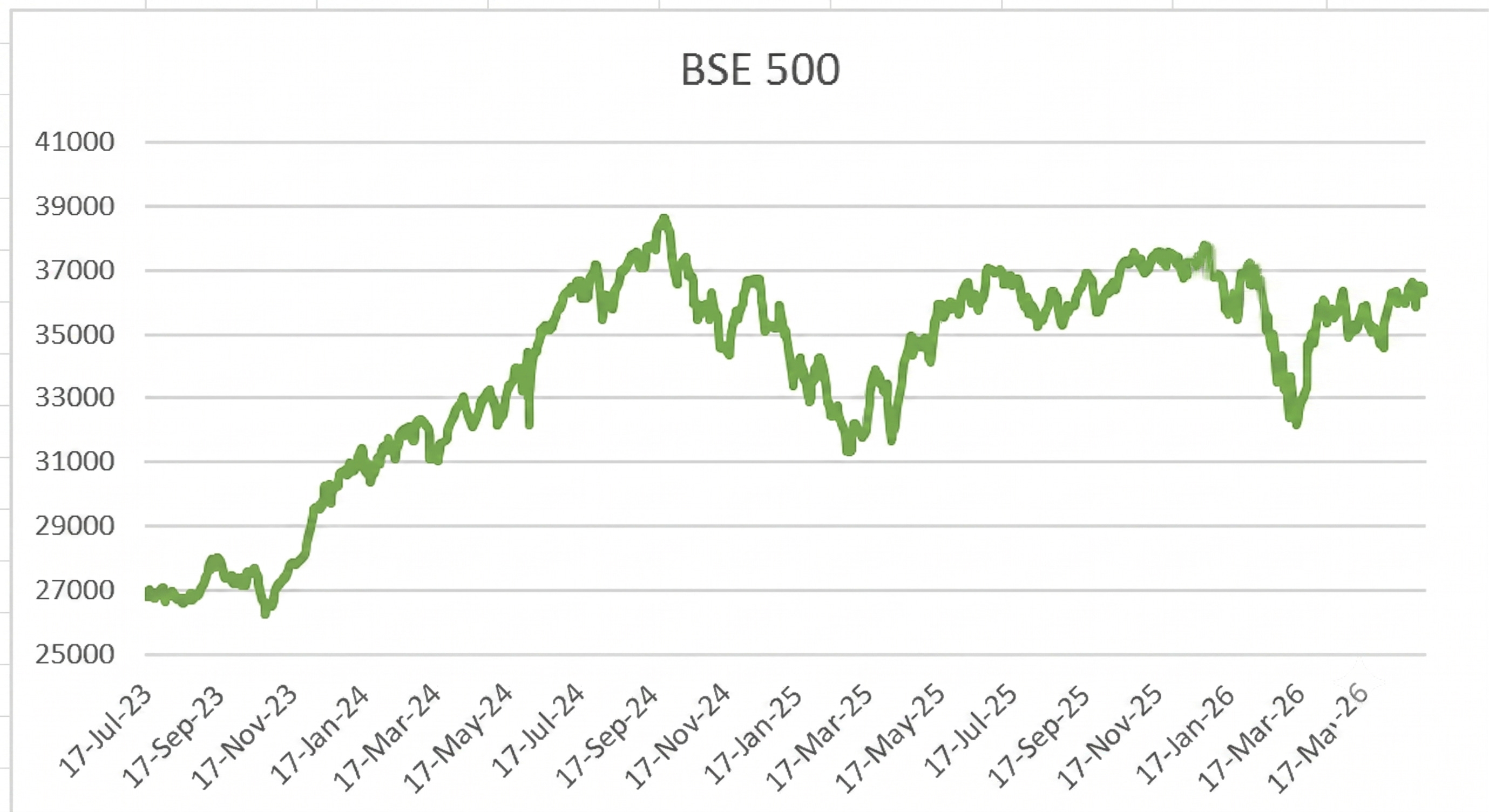
The stage for that rally was set in late 2023. Retail participation was surging, domestic institutional investors (DIIs) were pouring money into equities, and foreign institutional investors (FIIs) were also increasing their exposure. Optimism was everywhere.
Between November 2023 and September 2024, the BSE 500 Index delivered an astonishing return of nearly 47% in just ten months.
But beneath the excitement, valuations had become increasingly difficult to justify.
At its peak, the BSE 500 traded at a P/E multiple of 28.2x, the highest level seen in the previous five years. While that was expensive, the real excesses were visible in the broader market.
BSE 250 Small Cap: 30x
BSE 150 Mid Cap: 38x
These valuations were trading roughly 40–50% above their long-term median multiples. Companies that traditionally commanded a P/E of 20–25x were suddenly being valued at 35–50x, and investors accepted it as the new normal.
Think of it this way. Imagine paying ₹7,500 for a pair of jeans whose fair price is closer to ₹5,000. You may still love the product, but you’re unquestionably overpaying for it. That was precisely what was happening in the Indian stock market. Experienced investors, having witnessed similar bouts of euphoria in previous market cycles, began booking profits.
The FII Exodus Since September 2024
Foreign Institutional Investors were among the first to head for the exit.
In 2024 alone, FIIs pulled out nearly ₹1.2 lakh crore from Indian equities. The selling intensified in 2025, with net outflows touching almost ₹1.98 lakh crore. The reasons were twofold.
First, India’s elevated valuations made other markets appear relatively more attractive. Second, global capital was chasing what was arguably the biggest investment theme of the decade, Artificial Intelligence. While Indian markets struggled under the weight of persistent selling, the NASDAQ continued to scale new highs, fuelled by AI infrastructure, semiconductor companies and hyperscalers. Unfortunately, India’s technology sector remained largely centred around IT services rather than building AI platforms, leaving domestic investors with limited exposure to this global megatrend.
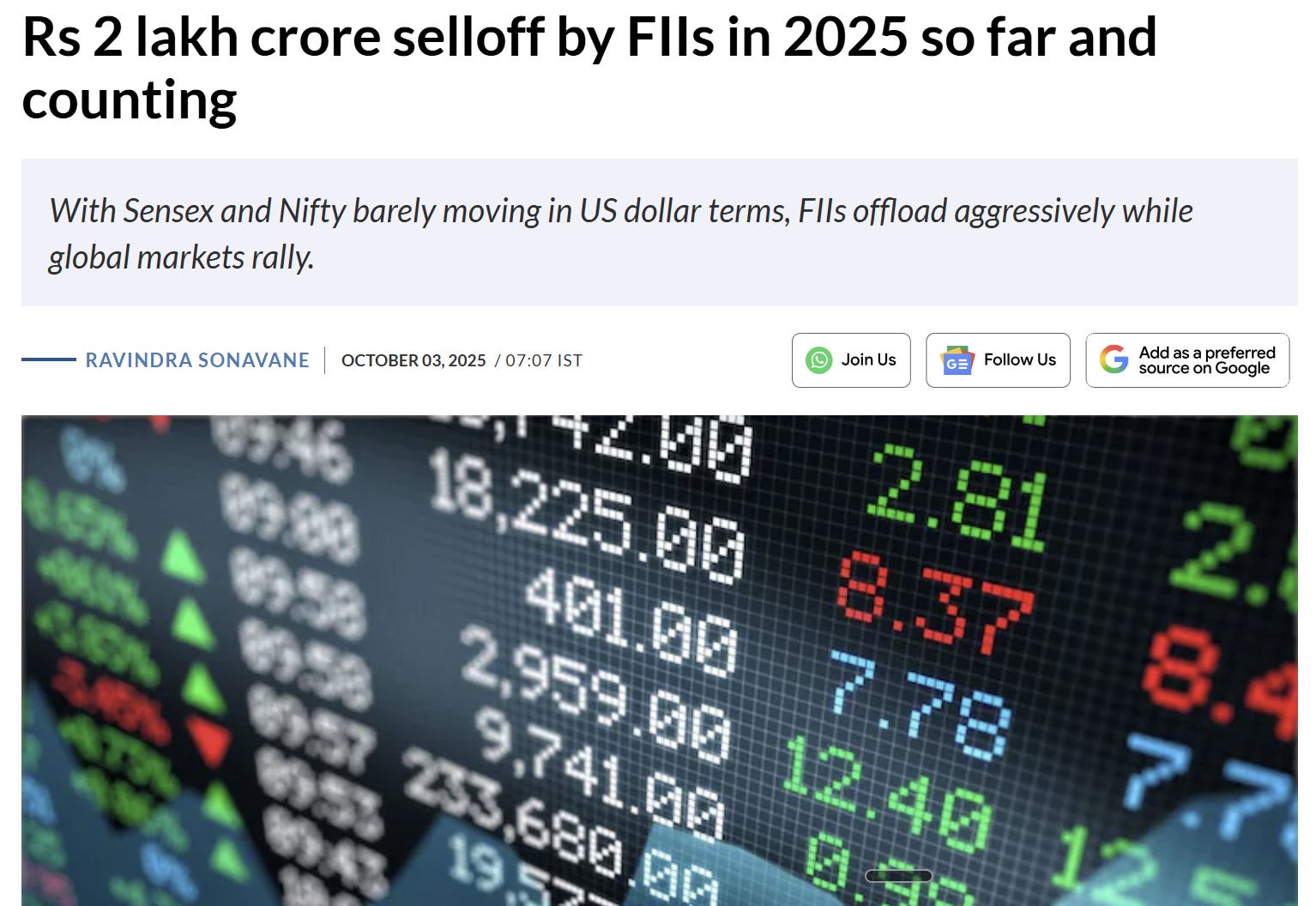
The sustained FII exodus gradually drained liquidity from the market. As volatility increased and returns moderated, retail participation also cooled. FY26 witnessed the first decline in individual participation in the Indian equity market in nearly a decade, removing yet another source of liquidity.
When liquidity dries up, valuations rarely remain elevated for long. The premium that investors were happily paying in 2024 slowly evaporated. Stocks that once looked prohibitively expensive suddenly became reasonably priced, while several fundamentally strong businesses began trading at outright discounts to their historical valuations.
And that is exactly when value investors become the most active.
Market Corrections: Gold Mine for Patient Investors
History has repeatedly shown that the best opportunities are rarely found when markets are making new highs. They emerge during periods of pessimism, when fear pushes prices well below intrinsic value. Corrections don’t merely reduce stock prices, they improve future return potential for patient investors.
More importantly, this correction has occurred even though India’s long-term investment story remains firmly intact.
Inflation has remained largely under control, allowing the Reserve Bank of India greater flexibility on interest rates. India continues to be among the fastest-growing major economies in the world, supported by healthy GDP growth, improving corporate balance sheets and robust domestic consumption. Government-led initiatives such as the Production Linked Incentive (PLI) schemes are strengthening India’s manufacturing ecosystem, while both public infrastructure spending and private sector capital expenditure continue to gather momentum. These structural tailwinds have not weakened during the market correction, if anything, they have become stronger.
The difference today is that investors can participate in this long-term growth story at far more attractive valuations than they could at the market’s peak. That shift is already beginning to reflect in capital flows.
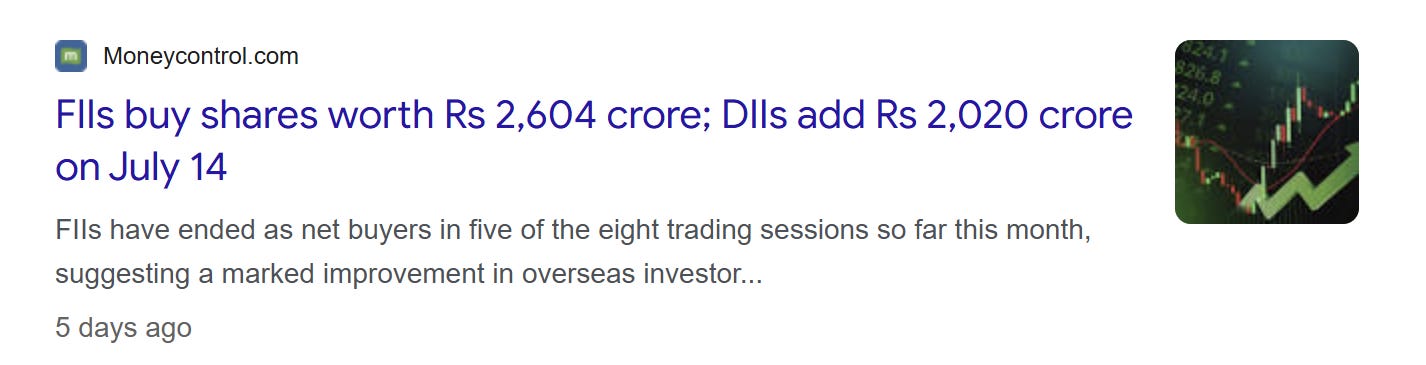
Domestic Institutional Investors have continued deploying capital consistently throughout the correction, providing stability to the markets. More encouragingly, Foreign Institutional Investors have also started returning, with net inflows turning positive in July 2026 after an extended period of selling. FIIs have bought equity worth more than $2.5 billion in the month of July itself, and the month hasn’t even come to an end.
Of course, risks remain. Geopolitical tensions, including the ongoing conflict involving the US and Iran, continue to create uncertainty for global markets. Any escalation could once again trigger bouts of volatility across emerging markets, including India. However, investing has never been about waiting for a world without uncertainty. It has always been about identifying opportunities where the long-term rewards outweigh the short-term risks.
The excessive optimism of 2024 has been replaced by healthier valuations, while the structural growth drivers that powered the economy remain firmly in place. If earnings continue to grow and capital continues flowing back into the market, the current phase may well be remembered not as the end of a bull market, but as the correction that laid the foundation for the next one.
Green Portfolio: Waiting with a Dazzling Wishlist

At Green Portfolio, we are constantly searching for businesses that have the potential to become tomorrow’s multibaggers. Over the years, our research team has curated a watchlist of high-quality companies that may not be household names today but possess the characteristics to create meaningful wealth over the long term.
Our investment philosophy has always centred around identifying fundamentally strong small and mid-cap businesses operating in sectors that stand to benefit from India’s structural growth story. Whether it is defence, railways, energy, textiles or electronics manufacturing (EMS), we look for businesses with capable management, scalable business models and long growth runways. But just as importantly, we wait for the right price.
A good example of this philosophy was our investment in RHI Magnesita in May 2021. Our thesis was straightforward. As India’s steel and cement industries expanded, the demand for refractory products was set to rise alongside them. We believed the company was well-positioned to benefit from this structural trend, and more importantly, the market was significantly undervaluing that opportunity. We accumulated the stock at a P/E of roughly 13–15x, where the risk-reward was firmly in our favour.
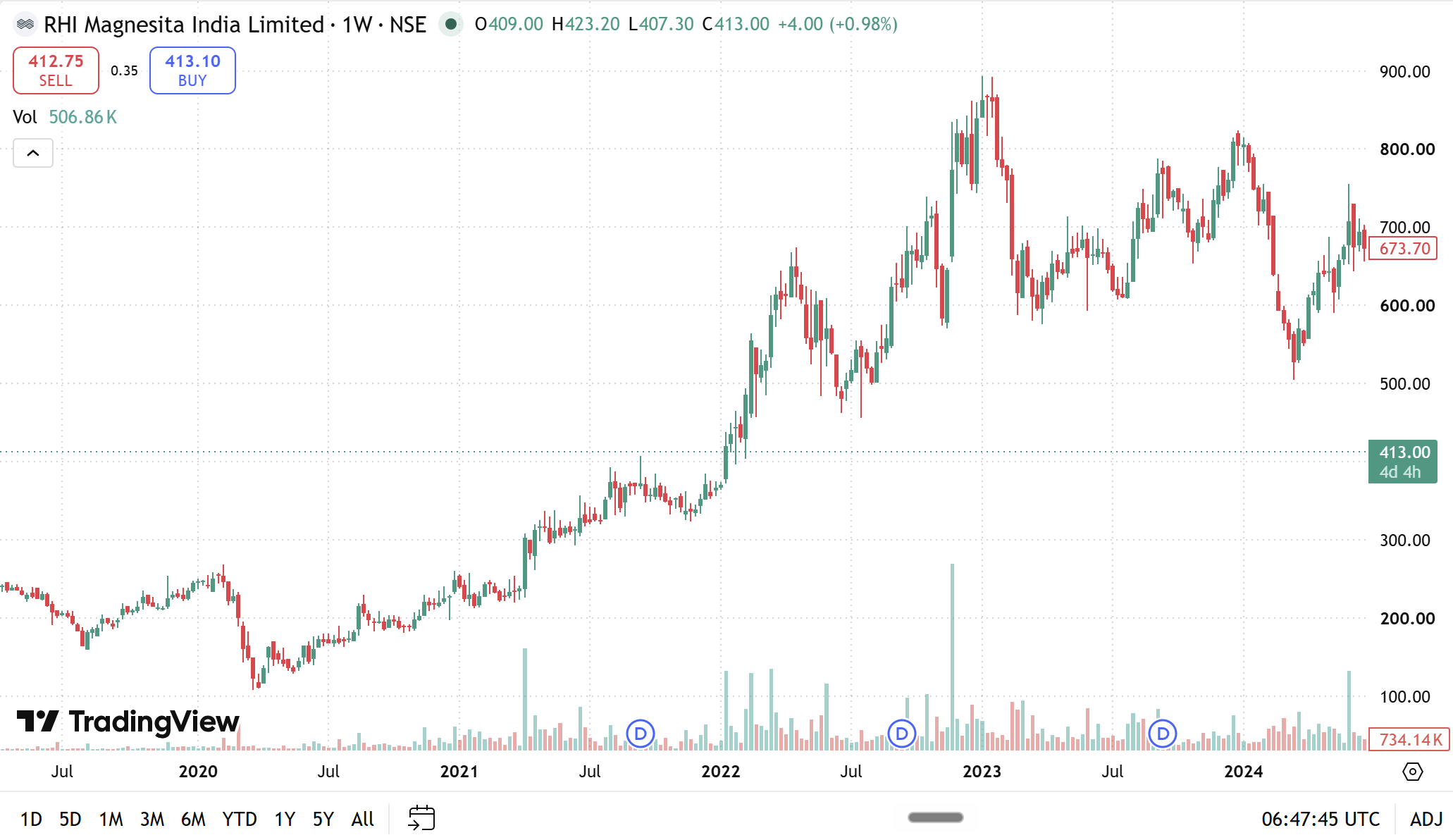
Over the next two years, the thesis played out as expected, and we exited the investment around September 2023 with approximately 3x returns. Interestingly, the stock continued to climb by another 30% after our exit. But by then, the valuation had crossed 35x P/E, a level that no longer offered an adequate margin of safety in our view.
That experience reinforces an important lesson. Successful investing isn’t just about identifying great businesses; it’s about buying them at sensible valuations. During bull markets, this discipline is often the first principle investors abandon as optimism pushes prices higher. Yet history has shown that valuation discipline is precisely what separates long-term wealth creation from short-term speculation.
That is why market corrections are so valuable.
They allow patient investors to buy exceptional businesses without paying exceptional prices. Our analysts have been tracking several companies for months, waiting for valuations to become favourable. With the recent correction bringing prices back to more reasonable levels, many of those businesses are now beginning to enter our investable universe.
The long-term opportunity in India remains intact. The only difference today is that the price of admission has become far more attractive. So, hopefully you participate and benefit from the End-of-Bear-Run Sale that the Indian stock market is offering today.
Disclaimer: This newsletter is for informational and educational purposes only and does not constitute investment advice or an offer or solicitation to buy or sell any securities, including in any public issue. Views expressed are based on publicly available information as of the date of publication and may change without notice. Please consult a qualified financial adviser before making any investment decision.