
Cylindrical Problems, Rectangular Solutions? LPG Scarcity and the Battle for India’s Kitchen
Almost 60% of India’s LPG comes from the Middle East. With the US-Iran hostilities refusing to die down, the Strait of Hormuz is effectively closed.

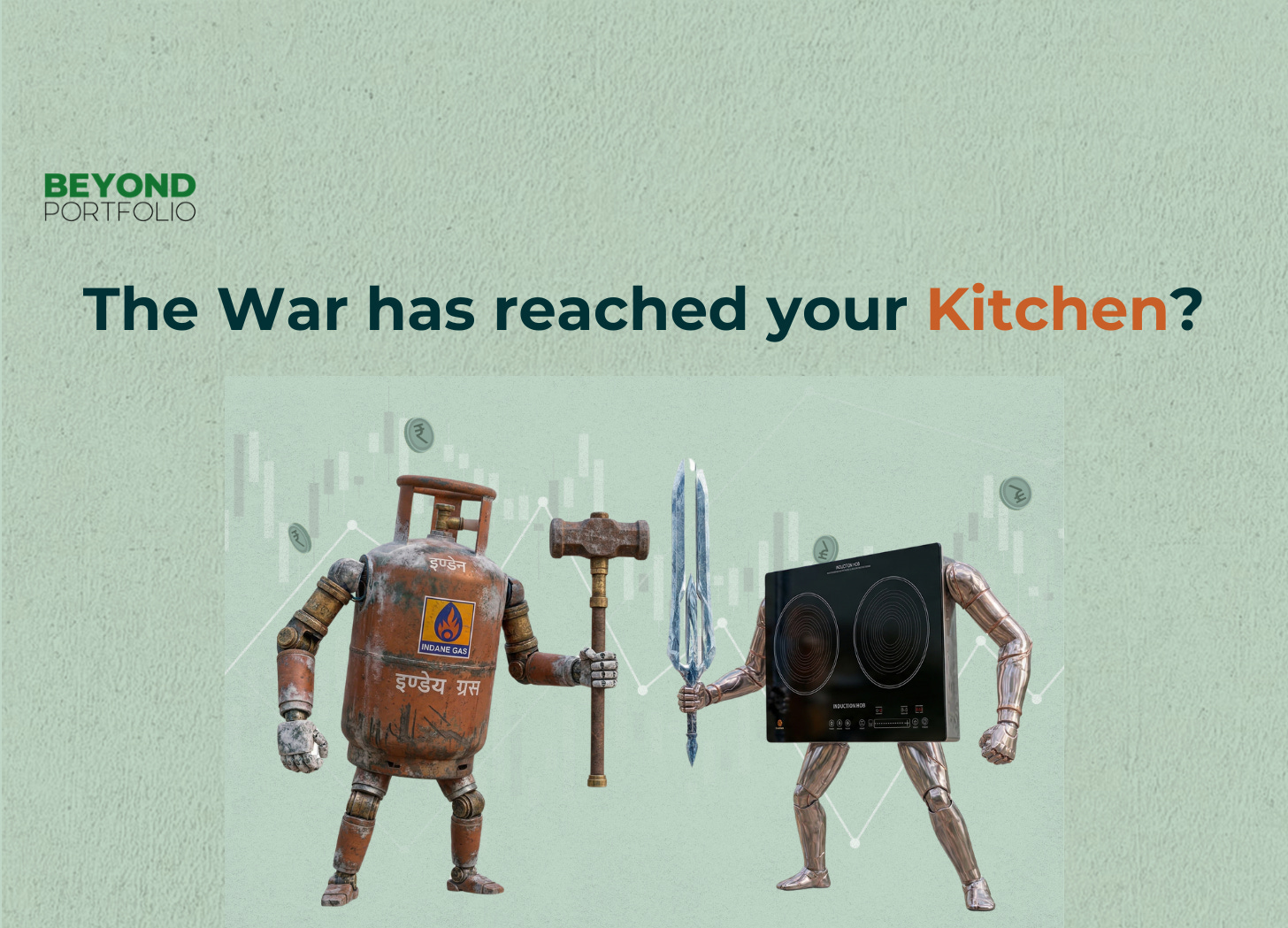
Almost 60% of India’s LPG comes from the Middle East. With the US-Iran hostilities refusing to die down, the Strait of Hormuz is effectively closed. For Indians used to taking their cooking gas for granted, this has meant a cooking gas scarcity at scale that India has not experienced in decades. This has forced kitchens, both commercial and household, to answer a question they never considered: what do you cook on when the LPG cylinder runs out?
The answer, it turns out, is complicated. And the business implications are more interesting than the headlines suggest.
The Vulnerability India Took for Granted
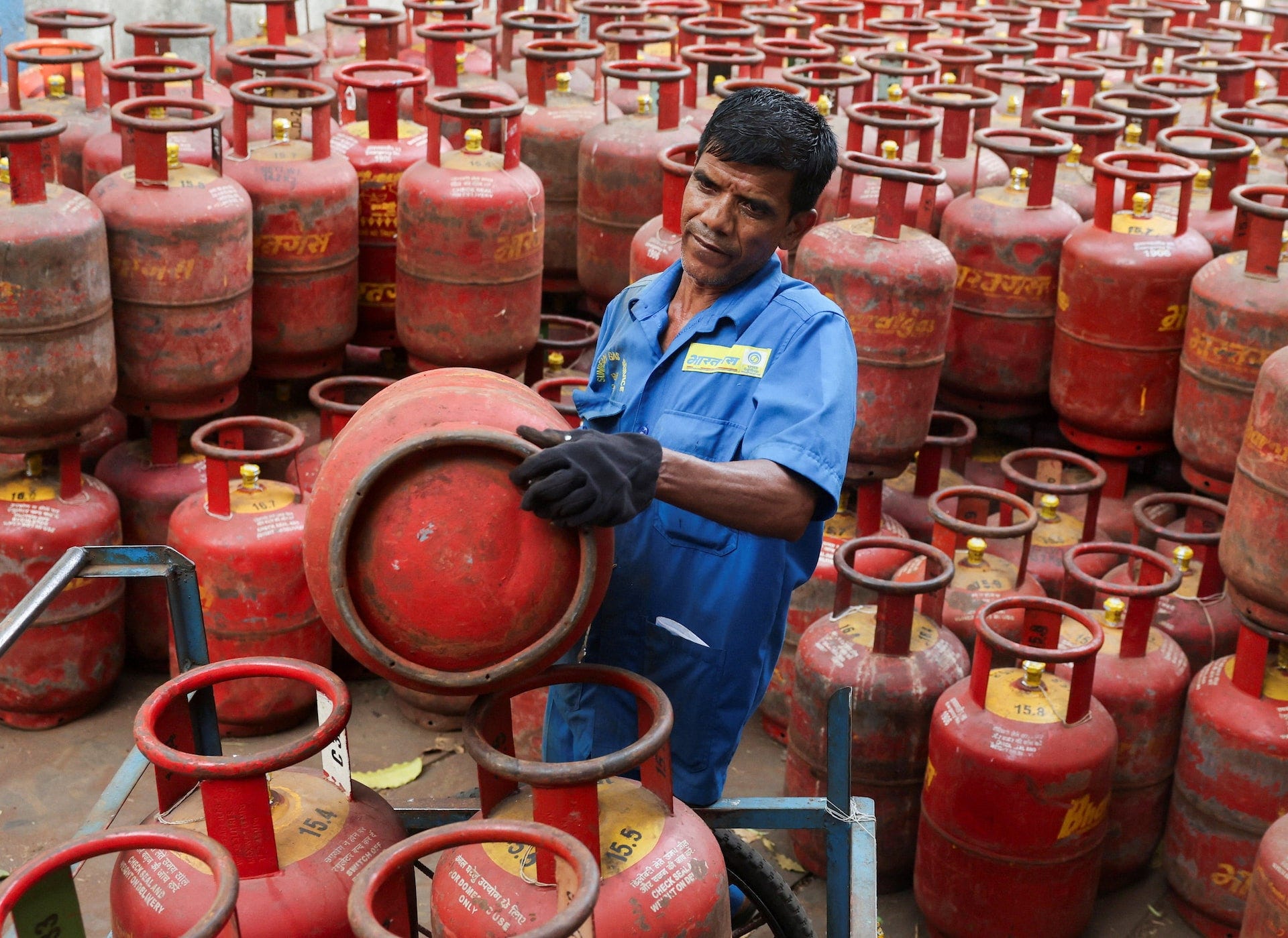
LPG consumption in India grew nearly 28-fold over the past two decades, from 32,600 barrels per day to over 923,000 barrels per day by 2023. That growth was deliberate policy. Successive governments pushed LPG as a cleaner, more efficient alternative to kerosene and biomass, with the Pradhan Mantri Ujjwala Yojana (PMUY) distributing subsidised LPG connections to rural households under the banner of women’s empowerment, eventually reaching nearly every household in India.
It was a genuine public health and policy success. But it was built on a quiet assumption: that Middle Eastern supply would remain uninterrupted. With 33 crore LPG connections and 60% of supply transiting through the Strait of Hormuz, that assumption is now being tested in real time.
India’s Position: Uncomfortable, But Not a Crisis. Yet.
“Sri Lanka declares Wednesdays off as Asian countries try to conserve fuel” reads a BBC headline.
Here is the part the panic headlines are missing. As of mid-March 2026, India is not in an LPG emergency. A fresh shipment has arrived, strategic reserves are holding, and the government has been managing supply allocation across states with a degree of competence that reflects years of emergency planning.
India also holds a diplomatic card that most of its peers do not. Unlike the US, the EU, or even most Gulf-aligned nations, India has maintained functional, non-hostile diplomatic relations with Iran throughout the conflict. That channel, quiet as it is, gives India a degree of back-channel optionality on energy flows that does not exist for countries that have aligned more explicitly with either side.
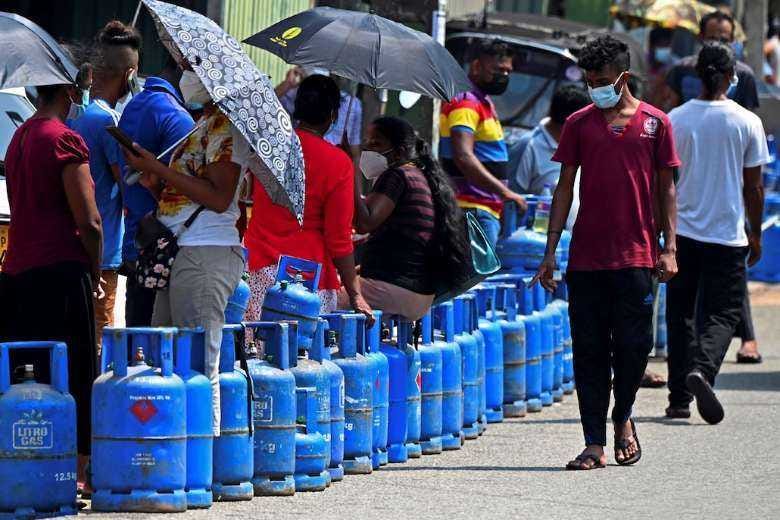
The contrast with India’s neighbours is stark. Pakistan and Bangladesh, both of which lack strategic LPG buffers and import diversification, are already experiencing severe shortages. Fuel rationing, price spikes, and supply disruptions are hitting households and commercial kitchens hard. Sri Lanka, still recovering from its 2022 economic crisis, is similarly exposed.
India is not them. Not today. But the gap between “managing fine” and “acute shortage” in an energy crisis can close faster than governments plan for. The current comfort is real, but it is not a reason to declare the risk resolved.
For investors, the honest framing is this: India’s LPG exposure is a medium-term structural risk, not an immediate earnings crisis. The companies most exposed to supply disruption (LPG importers, downstream distributors) deserve monitoring, not panic selling. The companies best positioned to benefit from accelerated alternatives investment (PNG distributors, induction and cookware players, gas infrastructure) deserve attention, not euphoria either.
What Should Work, But Usually Doesn’t: Alternatives for Indian Households
Induction cooktops

In parts of Europe and the US, 30% and 19% of households respectively have moved to induction cooktops. TTK Prestige, Hawkins, and various consumer durable players have been advertising induction cookers as an alternative. But the product faces structural barriers that advertising alone cannot solve.
There are three reasons why induction has not worked for Indian home cooks:
Cooking style: Indian cooking, whether dals, rotis, curries, or rice, requires manual manipulation of the vessel, with a visible flame used to control heat and char. Phulkas and rotis are directly roasted on flames. Slow, even heat distribution, which is what induction does well, is a Western cooking preference, not an Indian one.
Additional investment: Indian cookware is designed for curved-bottom vessels that maximise heat transfer from a flame. Induction requires flat-bottomed vessels. For a household already owning a full set of cooking vessels, this is an unwelcome and often non-trivial additional cost.
Electricity requirements: Entry-level induction cooktops draw 1,200W; high-performance models draw up to 2,500W. Using a standard 5-amp socket is a fire hazard. Nearly 47% of Indian homes lack a single high-capacity 15-amp or 20-amp plug, and the ones available are typically occupied by a geyser or refrigerator. Add routine load shedding, and the reliability argument collapses entirely.
One underrated household alternative that deserves mention: the electric pressure cooker. Models from TTK Prestige, Bajaj, and Havells work on lower-wattage draws, require no flat-bottom vessel investment, and directly suit Indian dal, rice, and curry cooking. This is a more realistic short-term household alternative than induction, and largely absent from the public conversation.
What Works for Commercial Kitchens: Charcoal and Industrial Induction
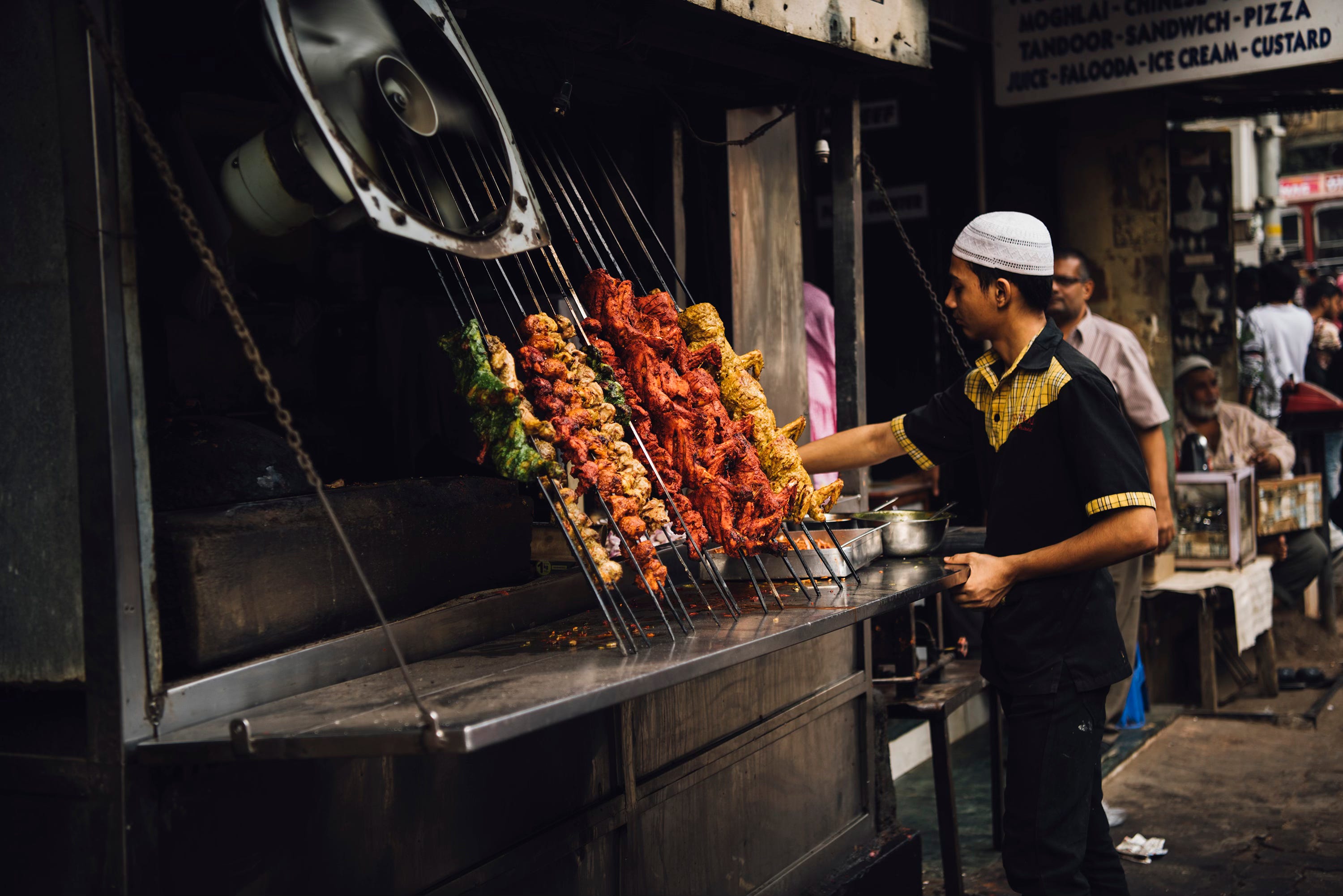
Commercial kitchens face a different set of constraints. For establishments with tandoors and open-fire cooking, charcoal is not a new idea. It has always been in partial use, and the flavour advantage is real: the aroma and char that charcoal produces in a tandoor is absent from a gas-based one. In a shortage, commercial kitchens simply buy more charcoal and extend their cooking timelines.
For commercial kitchens with 3-phase electrical connections, commercial-grade induction equipment is a viable alternative. The vessel and power constraints that make household induction difficult largely disappear at commercial scale. But neither charcoal nor commercial induction fully replicates the temperature control, speed, and flexibility of a gas flame, and both involve operational trade-offs that kitchens would prefer to avoid.
What Will Actually Work, But Is Not Yet Widely Available: PNG
There is a third alternative that meets Indian cooking requirements, is as effective as LPG, is cheaper in many configurations, and is not dependent on the Strait of Hormuz. Piped Natural Gas (PNG) is the structural answer. It is just not available to most Indians yet.
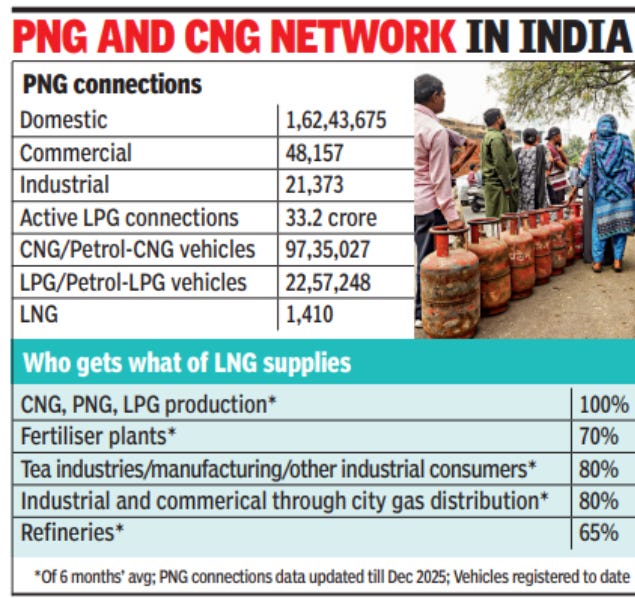
Currently, only about 4% of urban households are connected to a dedicated PNG distribution infrastructure. PNG is lighter than LPG, offers more calorific value, and burns cleanly on a standard cooking stove with minor modifications. More importantly, India does not depend on the Middle East for its natural gas in the same way it does for LPG. Domestic natural gas production runs at approximately 90 million standard cubic metres per day (mmscmd), and imports can be sourced from Russia, Australia, and the US. Supply diversification is structurally easier for PNG than for LPG.
For the government, expanding PNG infrastructure reduces import dependency and keeps more cooking energy supply within domestic control. The economics work. What has been missing is urgency. The current crisis may provide exactly that.
What to Watch: The Companies in This Story
Gas utilities and PNG distributors (IGL, MGL, Gujarat Gas):
This is where the structural opportunity sits. A prolonged LPG shortage is the strongest political and economic argument for PNG expansion India has seen in years. Watch for: government fast-tracking of City Gas Distribution (CGD) network expansion under the 12th CGD bidding round, new geographical area authorisations by PNGRB, emergency PNG rollout announcements in LPG-shortage-affected cities, and capex guidance from IGL, MGL, and Gujarat Gas on pipeline investment timelines.
Cookware and consumer durable companies (TTK Prestige, Hawkins, Bajaj Electricals, Havells):
Induction cooktop sales will likely spike short-term on panic buying. The question is whether this converts into sustained adoption. Watch for: whether companies bundle flat-bottom cookware with induction cooktops to reduce the vessel investment barrier, electric pressure cooker sales data, and commentary on commercial kitchen order pipelines.
Electricity distribution and generation companies:
A household switching from LPG to induction adds roughly 1.5 to 2.5 kW of peak demand. At any meaningful scale, this becomes a grid management problem. Watch for: state government peak demand advisories, load shedding escalation in cities with acute LPG shortages, and any emergency power procurement by distribution companies.
LPG importers and downstream distributors:
These are the most directly exposed to supply disruption. Margin pressure from procurement cost spikes, allocation constraints, and potential price cap conflicts with government subsidy policy all warrant monitoring. Watch commentary from IOCL, BPCL, and HPCL on LPG import cost pass-through and subsidy receivables.
The Bottom Line
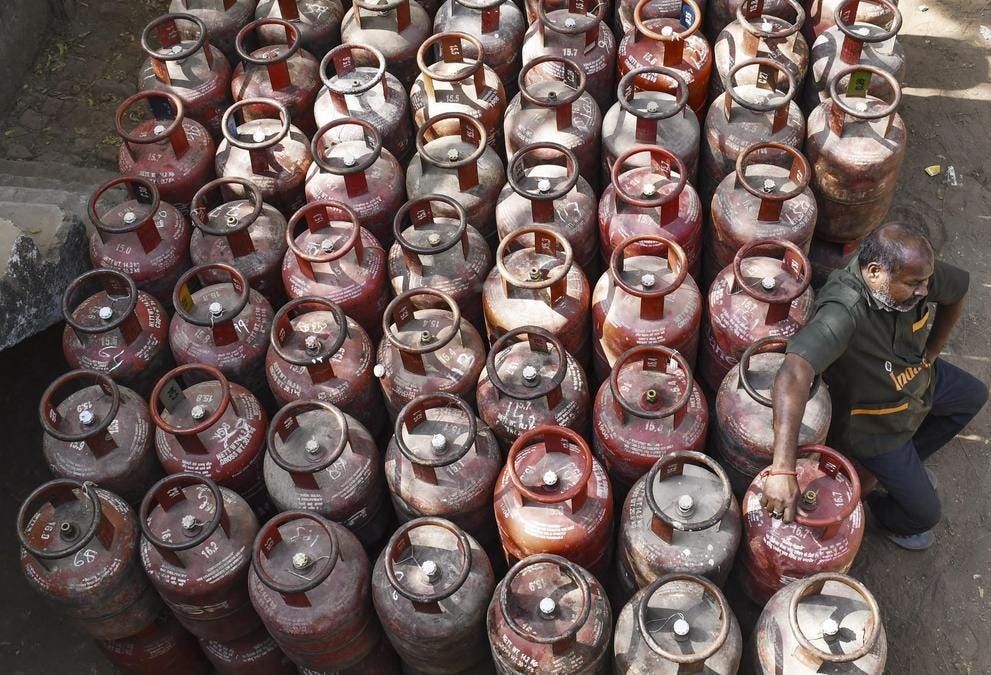
India is managing the LPG situation better than its neighbours, and better than the crisis headlines suggest. Strategic reserves, import diversification, and functioning diplomacy with Iran give India more room than Pakistan, Bangladesh, or Sri Lanka currently have. For investors, this is a “watch closely” situation, not a “sell everything” one.
But the infrastructure vulnerability this crisis has exposed is real and permanent. India built 33 crore cooking connections on the assumption that Middle Eastern supply would never be disrupted. That assumption is broken. Whether this shock accelerates the PNG rollout, drives induction adoption in commercial kitchens, or simply adds political pressure for energy diversification in the kitchen as much as in the power grid, the cooking habits of 1.4 billion people are quietly under negotiation.
The cylinder may refill. The question will not go away.
Disclaimer: This newsletter is for informational and educational purposes only and does not constitute investment advice or an offer or solicitation to buy or sell any securities. Views expressed are based on publicly available information as of the date of publication and may change without notice. Please consult a qualified financial adviser before making any investment decision.